
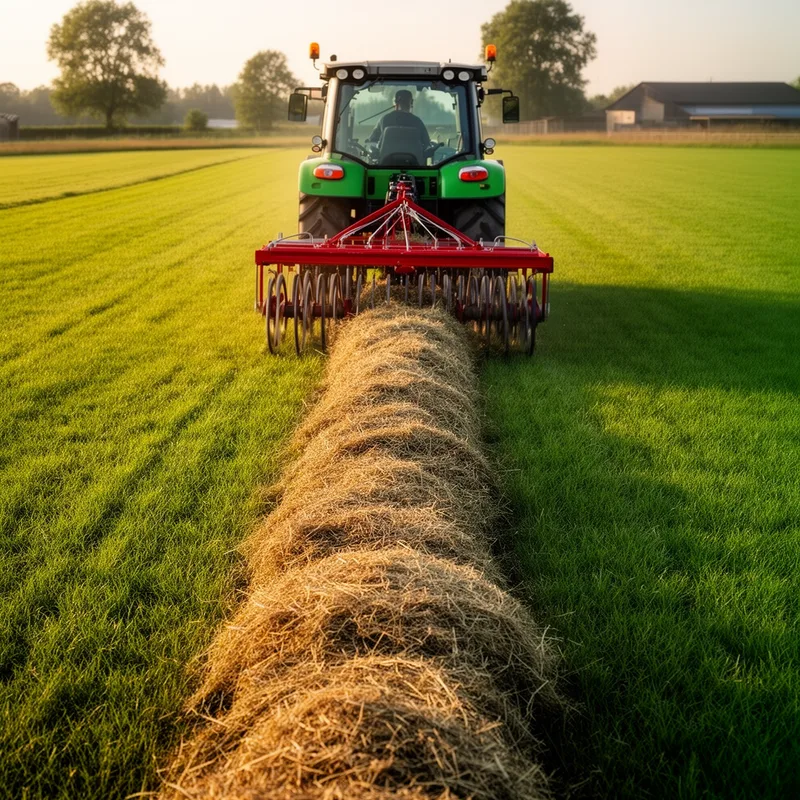
to windrow
- verb
- /ˈwɪndroʊ/
- Specialized
- Before the harvest, the team will windrow the cut plants for easier collection.
Examples
-
After the liquids are removed, the cartons are mixed with shredded yard trimmings and windrowed.
Academic text (1997) -
"Normally, yard trimmings are just windrowed and then turned occasionally with a front-end loader."
Academic text (1997) -
The material then will be windrowed until it cures.
Academic text (1998) -
Material is then mixed with other feedstocks and windrowed below.
Academic text (1999) -
Material remaining after sorting is conveyed to a composting building, ground, and windrowed.
Academic text (1998) -
After the digester phase, feedstock is passed through a PowerScreen to remove anything larger than two inches, and then windrowed for three weeks.
Academic text (1998) -
Materials are mixed and windrowed on top of a pad of wood chips with a Knight Reel Auggie mixer and Case tractor.
Academic text (1996) -
Poultry manure and yard trimmings were mixed with a front-end loader before windrowing.
Academic text (1996) -
Farmers often windrow the hay to allow it to dry evenly in the sun.
-
To prepare the grass for baling, they usually windrow it in tight rows.
Synonyms

 28
1.0
28
1.0

To gather leaves or loose soil using a long-handled tool with teeth
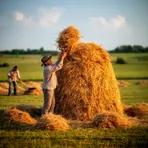
To pile hay or straw into a stack outdoors for storage
How Organized

Surface Forms
Morphology
Etymology
To windrow is to put cut crops or grass into a neat 'row' so the 'wind' can dry them before you collect them, which is exactly what farmers do when they windrow hay.