

windrow


 1
8.0
1
8.0
- noun
- /ˈwɪndroʊ/
- Specialized
- Lastly, leaves were placed on top of the bedding and crab, and windrows were turned and mixed.
- windrow turner
- windrow composting facilities
- aerated windrows
Examples
-
"All we do is add water and turn the windrows with a front-end loader," notes Riley.
Academic text (1999) -
As Craul advised, it was placed in windrows and turned every few days until it matured.
Academic text (1999) -
At that point, the volume of the windrow had decreased by about 50 percent.
Academic text (1999) -
Paper products at the edge of the windrow were reincorporated as needed.
Academic text (1999) -
Forty-seven percent of farmers with a turned windrow system use specific windrow turning equipment.
Academic text (1995) -
Sugarbush employees will turn the windrow and add water to it until the materials have composted.
Academic text (1995) -
Temperature sampling began immediately, and each windrow was monitored daily for temperature development, pile shrinking, and moisture content.
Academic text (1999) -
Feedstocks are composted in outdoor windrows for approximately six months and cured for an additional two months.
Academic text (1999) -
The city also composts yard trimmings outside in windrows that are aerated with a Wildcat turner.
Academic text (1995) -
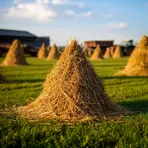
The farmer created a long windrow of hay in the field to dry before collecting it.
Synonyms
How Organized

Surface Forms
Morphology
Etymology
Windrow comes from the two simple words wind and row, and it pictures a long 'row' of cut crops or grass left in a field so the 'wind' can dry them. That's why a windrow is a long line of hay, leaves, or snow left to dry or be collected.