

wild wind
- noun
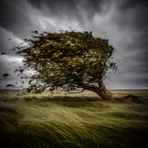
- She wrapped her coat tightly as the wild wind swept across the open field.
Examples
-
The wild wind howled through the trees.
-
During the storm, the wild winds caused significant damage.
-
The wild wind knocked over several trees during the storm last night.
-
Sailors feared the sudden arrival of a wild wind while out at sea.
-
The wild wind howled through the trees, making it hard to hear anything else.
-
As the storm approached, the wild wind swept across the open fields, bending the grass to the ground.
-
The wild wind knocked over several trash cans on the street, scattering their contents everywhere.
Synonyms

 29
1.6
29
1.6

A very strong wind that can blow down trees and cause damage
 24
5.8
24
5.8
A very strong wind that can blow down trees
 23
1.0
23
1.0
A wind that blows very hard and can move things
 11
8.8
11
8.8
A very strong storm with winds that can damage things
 9
4.0
9
4.0
A strong spinning column of air that lifts dust and leaves
 8
3.0
8
3.0
A storm with very strong winds that can cause damage


 1
7.5
1
7.5
A strong wind with sudden hard gusts
 1
2.2
1
2.2
A wind that is strong enough to move small branches and belongings

A very strong wind that can topple trees and damage buildings

A very strong sea wind that blows about 45 to 53 miles an hour

A sudden strong cold wind that blows down from mountains to the coast
Antonyms


How Strong

Surface Forms
Morphology
The meaning follows directly from combining 'wild' (violent/intense) with 'wind' (air movement or figurative force), so a B1 learner who knows both constituents can infer a powerful or sudden wind or force. This is a straightforward adjective+noun composition and the literal and common figurative uses are predictable from the parts.
Etymology
Wild wind comes from the image of air so strong and uncontrolled it knocks over trees and blows things away. wild means uncontrolled and wind is moving air, so the phrase means 'a very strong wind'.