
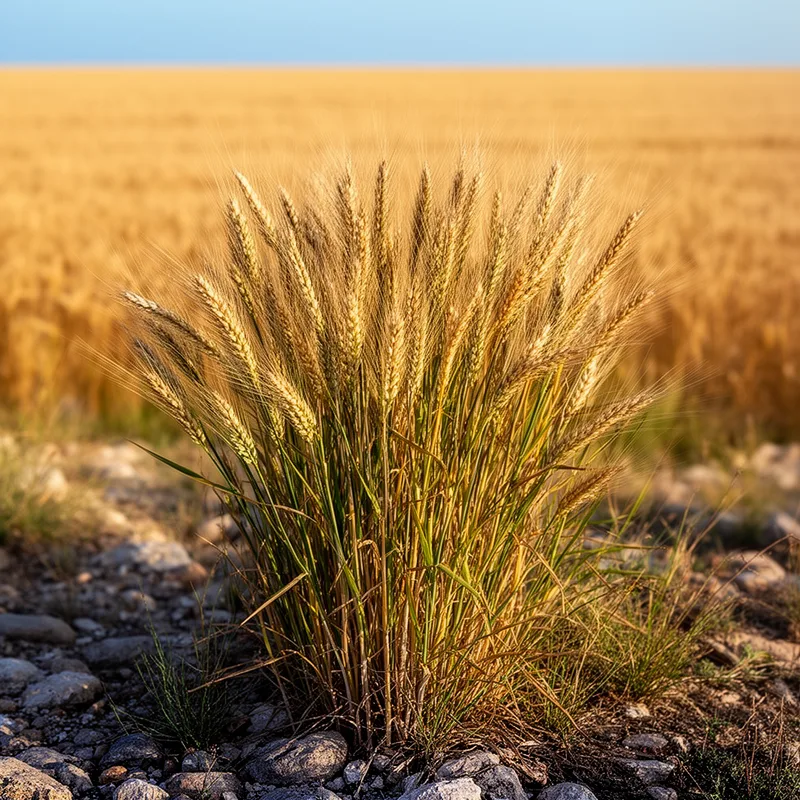
wild wheat
- noun
- The cattle trail led south, past humped burial mounds covered over with wild wheat and blue coneflowers.
Examples
-
The archaeologists discovered ancient tools used for harvesting wild wheat in the region, highlighting its importance in early agriculture.
-
The farmers in ancient Palestine relied on wild wheat as it grew naturally in the surrounding fields.
-
Researchers study wild wheat to understand its genetics and how it adapted to harsh environments without human cultivation.
Synonyms

A wild wheat from the Middle East that is the ancestor of farmed wheat
A wild type of wheat that is the ancestor of farm wheat
Surface Forms
Morphology
The meaning 'a type of wheat that grows naturally' is directly derivable from combining 'wild' (living naturally, not domesticated) with 'wheat' (a cereal crop). This adjective+noun composition is a straightforward, cross-linguistic pattern, so an average B1 learner who knows both words will understand the MWE.
Etymology
Wild wheat comes from the simple picture of wild and wheat: wheat that grew 'not planted' and lived by itself in nature. That's why the name means the natural, early forms of wheat that later became the farmed crops people grew.

