

wild leek


 1
7.4
1
7.4
- noun
- /waɪld lik/
- The wild leek is often found in damp woods.
Examples
-
Researchers studied how the wild leek has adapted to different environments across Europe.
-
A patch of wild leeks was discovered growing near the edge of the forest.
-
The wild leek blooms in late spring and attracts many pollinators in the meadow.
-
Many chefs love using wild leeks in their dishes.
-
In the spring, many foragers search for wild leeks in the forest to use in their cooking.
-
The chef added wild leeks to the soup for a unique flavor and aroma.
-
They found wild leeks growing near rivers and moist, shaded areas.
Synonyms
 1
3.8
1
3.8
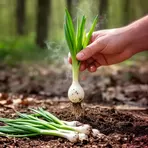
A wild plant like a small onion with edible bulbs and a strong smell

A wild leek plant with a large bulb and a tall flower stalk
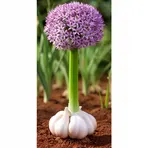
A large garlic plant with a big bulb and tall stalk bearing purple-tinged flowers
Surface Forms
Morphology
The meaning 'a leek that grows in the wild (ramps)' is directly and transparently derived from combining 'wild' (growing naturally) with 'leek' (a vegetable). This adjective+noun compounding is a common, cross-linguistic pattern, so a B1 learner who knows both words would readily infer the MWE's meaning.
Etymology
Wild leek was named because it was a wild leek, a leek that grew in fields and meadows with a large bulb and tall stalks. So the name simply shows this plant lived 'wild' instead of in a garden.