
wild cinnamon
- noun
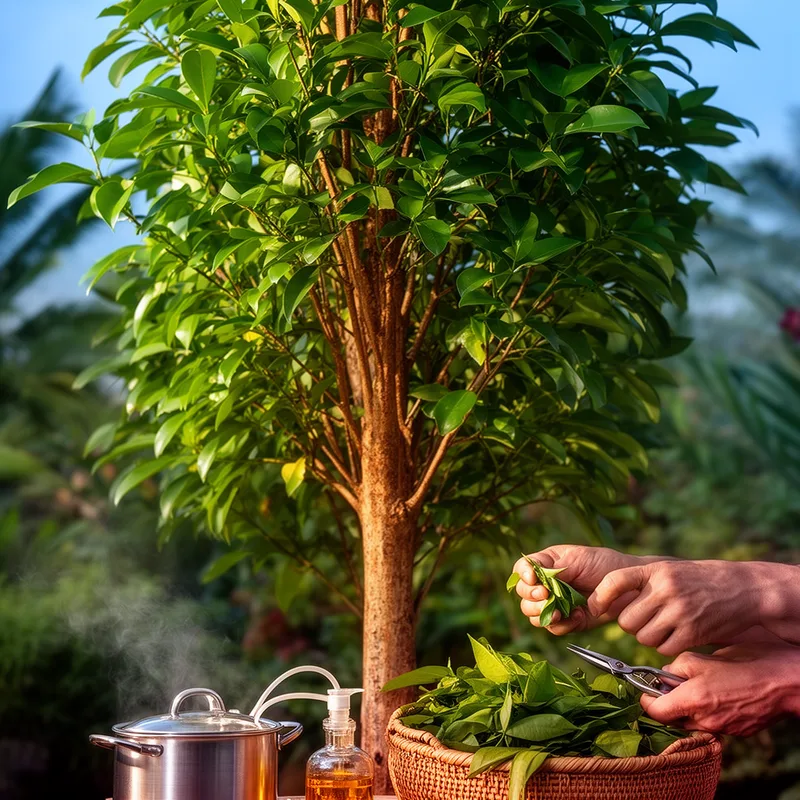
- The leaves of the wild cinnamon are distilled to produce the famous bay rum fragrance.
Examples
-
In the Caribbean, wild cinnamon is prized for its aromatic oils.
-
The wild cinnamon tree grows in tropical regions.
-
He planted a wild cinnamon tree in his garden for its fragrant leaves.
-
I love the scent of wild cinnamon in the air.
-
He planted a wild cinnamon tree in his garden for its fragrant leaves.
-
In the Caribbean, wild cinnamon is prized for its aromatic oils.
-
The leaves of the wild cinnamon are distilled to produce the famous bay rum fragrance.
Synonyms

A small evergreen tree from the West Indies with white scented bark used as a spice

A large evergreen shrub or small tree with white scented bark and purple-red flowers
A large evergreen shrub or small tree with white fragrant bark and small purple to red flowers
Surface Forms
Morphology
Etymology
Wild cinnamon comes from a tree or shrub that grows in the wild and has leaves or bark that smell like the spice cinnamon. Because people used its fragrant leaves or bark to make perfumes and 'bay rum', the name wild cinnamon now means that plant used for its scent.

