

wild chervil
- noun
- /waɪld ˈʧɜrvəl/
- The wild chervil grows abundantly in this area.
Examples
-
Many gardeners struggle to remove wild chervil from their lawns due to its fast growth.
-
Wild chervil can quickly invade fields and roadsides if left unchecked.
-
The tall stems and white flower clusters of wild chervil make it easy to identify.
-
Have you seen any wild chervil around here?
-
In the garden, we found several plants of wild chervil, which are known for their delicate white flowers.
-
The herbalist recommended wild chervil as an ingredient for salads due to its fresh flavor.
-
During our hike, we spotted wild chervil growing along the path, with its characteristic fern-like leaves.
Synonyms

A tall wild plant with umbrella-shaped clusters of small white flowers often by roadsides
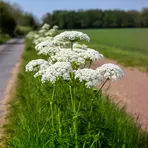
A tall plant with clusters of small white flowers that grows wild by roads and fields
Surface Forms
Morphology
The phrase denotes a chervil plant that grows naturally rather than being cultivated, which follows the straightforward adjective + noun composition ('wild' + 'chervil'). This compositional pattern is common and non-idiomatic, so a B1 learner who knows both constituents can infer the meaning.
Etymology
Wild chervil comes from the words wild, for plants that grow by themselves, and chervil, a small parsley-like cooking herb. When that gentle herb grew in fields as a tall, rough plant with white flower clusters, people called it wild chervil, so the name now refers to a common tall 'weed'.

