
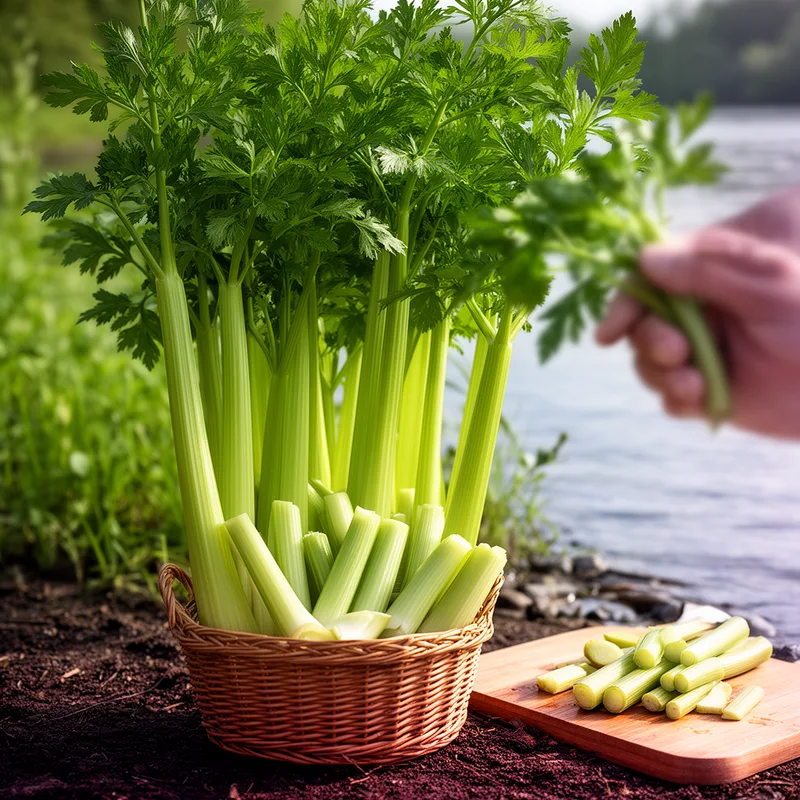
wild celery
- noun
- /waɪld ˈsɛləri/
- UK
- Many chefs use wild celery to add a unique flavor to their dishes.
Examples
-
In some regions, wild celery is gathered in the spring for traditional recipes.
-
I found some wild celery growing by the river.
-
The banks of the river were lined with tall wild celery plants swaying in the breeze.
-
Have you ever tasted wild celery?
-
In some regions, wild celery is gathered in the spring for traditional recipes.
-
Many chefs use wild celery to add a unique flavor to their dishes.
-
The banks of the river were lined with tall wild celery plants swaying in the breeze.
Surface Forms
Morphology
wild + celery
The meaning is directly built from 'wild' (growing naturally/not cultivated) + 'celery' (the vegetable), so a learner who knows both words will infer it denotes celery growing in the wild. This ADJ + noun compositional pattern is cross-linguistically common and therefore immediately transparent to a B1 learner.
Etymology
Wild celery comes from the words wild and celery and describes a wild plant that looks and smells like garden celery, with tasty leaves and stalks. That's why wild celery means 'an edible herb' people gather to add a celery-like flavor to food.

