
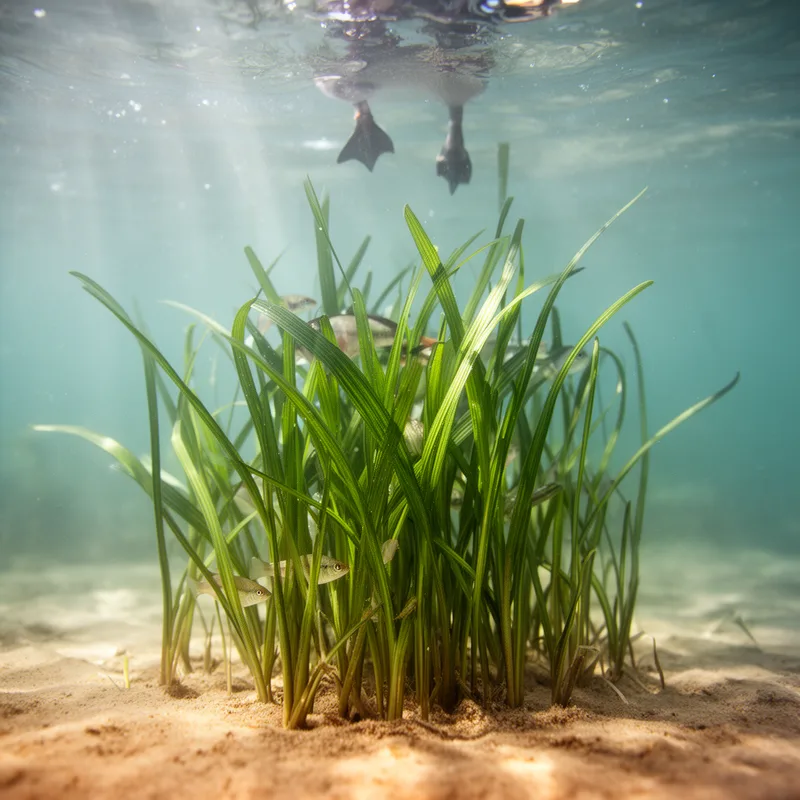
wild celery
- noun
- Scientists study the growth patterns of wild celery to monitor aquatic ecosystem health.
Examples
-
The pond was covered in wild celery, providing shelter for small fish.
-
Ducks often feed on wild celery found in shallow lakes.
-
Look at that wild celery!
-
I found some wild celery growing near the pond.
-
Ducks often feed on wild celery found in shallow lakes.
-
The pond was covered in wild celery, providing shelter for small fish.
-
Scientists study the growth patterns of wild celery to monitor aquatic ecosystem health.
Synonyms

 1
8.1
1
8.1

A long plant with narrow leaves that grows underwater and forms meadows for fish

A water plant with long ribbon leaves often used in freshwater aquariums
A long underwater plant with thin, ribbon-like leaves that grows in fresh water
Surface Forms
Morphology
wild + celery
The meaning is directly built from 'wild' (growing naturally/not cultivated) + 'celery' (the vegetable), so a learner who knows both words will infer it denotes celery growing in the wild. This ADJ + noun compositional pattern is cross-linguistically common and therefore immediately transparent to a B1 learner.
Etymology
Wild celery comes from the words wild and celery and describes a plant with long, celery-like stems that grow under water in lakes and ponds. That's why wild celery means 'a water plant' with long, narrow leaves that animals often feed on.