

wild buckwheat
- noun
- /waɪld ˈbʌkwiːt/
- US
- The wild buckwheat blooms beautifully in the desert.
Examples
-
Many insects are attracted to wild buckwheat flowers.
-
Many small desert animals depend on wild buckwheat for shelter and seasonal food resources.
-
The desert landscape was dotted with low mounds of wild buckwheat after the rare rains.
-
Botanists studied the unique flowering patterns of wild buckwheat across several western states this spring.
-
The garden was filled with the beautiful blooms of wild buckwheat and other desert plants.
-
During our hike, we noticed wild buckwheat growing along the rocky trail, adding color to the arid landscape.
-
The botanist identified the wild buckwheat as a native species thriving in the harsh desert environment.
Synonyms
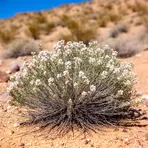
A low shrub with spreading branches and small clusters of flowers found in western United States deserts
Surface Forms
Morphology
The phrase combines 'wild' (growing naturally, untamed) with 'buckwheat' (a plant), so its meaning—buckwheat that grows in the wild or is not cultivated—is directly derivable from the constituents. This simple noun–modifier composition is cross-linguistically common, so a B1 learner who knows both words would readily understand the MWE.
Etymology
Wild buckwheat gets its name from the plant's small, hard seeds and tight flower clusters that look a bit like tiny grains, so people called it buckwheat even though it is not 'wheat'. The word wild shows it grows naturally in open places like deserts, so the name helps you remember it is a low, spreading desert shrub rather than a farm crop.

