

wickedly
 5
6.9
5
6.9

- adverb
- /ˈwɪkɪdli/
- Informal
- Our berries were wickedly good this year.
- wickedly funny
- wickedly smart
- wickedly fun
Loading YouTube…
Watch on YouTubeOvulation would be the full moon, which is when we're wickedly powerful.
- Ovulation would be the full moon, which is when we're wickedly powerful.
- My wife is a wickedly smart, bold, confident, driven woman.
- Now I'm going to use a wickedly ingenious invention here called a S pointing chariot.
- Or you could say something wickedly mind blowing brilliant.
- Ladies and gentlemen, the wickedly talented Lauren Lapkus one more time.
- I think Santos was channeling a slightly different singer, the wickedly talented one and only dozen.
Examples
-
My wife is a wickedly smart, bold, confident, driven woman.
-
Well, Mary, it looks like you got the runt of the litter, but he's not without charisma, and he is wickedly charming.
-
As I look back on it, it all seems like one of those wickedly romantic French movies.
-
October, when it came, began one of the most wickedly delightful episodes of my life.
Fiction book (1993) -
She was strong and real and messed up and wickedly honest, just like her mother.
-
Neil Young has some wickedly good lyrics, but the sound of his voice is a terrible, terrible nag.
Blog text (1) -
The pieces are wickedly amusing and wickedly well painted in tiny hairline brushstrokes that invite close attention to the details.
Blog text (32) -
Among the rich, he never forgot that he was an outsider, but Fitzgerald also proved to be a wickedly perceptive yet empathetic observer.
Academic text (2000) -
The umbrella is wickedly charming. When open, it's a mini merry-go-round, playing the "Penguin Theme" in a hauntingly childlike, rinky-dink style.
Fiction book (1992) -
The movie was wickedly entertaining, keeping us laughing the entire time.
Synonyms
 ∞
1.0
∞
1.0
To a large degree
 ∞
1.0
∞
1.0
To a very great degree
 584
2.3
584
2.3
To a very great degree
 351
1.4
351
1.4
To show strong feeling or degree
 230
1.4
230
1.4
To a very great degree, often before words like cold or sad
 212
1.3
212
1.3
Used before adjectives or adverbs informally to mean very
 137
3.9
137
3.9
To a much higher level than usual
 128
3.5
128
3.5
To a very large degree
 80
4.1
80
4.1
To a much higher level than usual

 57
4.6
57
4.6
To a very great degree
 50
3.9
50
3.9
To a very great degree
 26
4.5
26
4.5
To a very high degree
 21
3.5
21
3.5
To a very great degree
 18
4.4
18
4.4
Shows that something is very bad, unpleasant, or extreme
 17
5.2
17
5.2
To a very great degree
 15
4.3
15
4.3
In a very impressive and successful way
 12
3.6
12
3.6
To a very high degree
 12
6.0
12
6.0
To emphasize something, like saying very
 5
5.4
5
5.4
To make a describing word much stronger
 4
6.2
4
6.2
To a very great degree
An informal word meaning very, often used in New England

People use it informally to mean very before adjectives
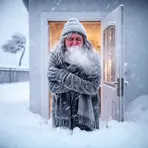
To a very high degree

To a very great degree

To make a describing word much stronger

Shows that a describing word is very strong

To a very large degree
Antonyms

How Intense

Surface Forms
Morphology
Etymology
Wickedly is also used as slang because people began using wicked to mean 'very' or 'extremely', so saying something is 'wickedly good' simply means it is very good.