

wholemeal
- adjective
- /ˈhoʊlˌmiːl/
- UK
- For my lunch today, I'm just having a piece of wholemeal toast and some cottage cheese on top.
Examples
-
Next up, I wanted to show you how to make some wholemeal waffles.
-
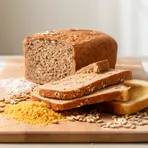
I prefer wholemeal bread because it is healthier than white bread.
-
And so that will be called, you said whole meal or so in the UK, the term is wholemeal has a legal requirement.
-
So here we have tomato wholemeal pasta with cheese.
-
If flour is being used, it should usually be wholemeal, while sweetening is achieved through raw sugar or honey.
-
Lunch Wholemeal bread, butter, honey, salad, vegetables, a hard boiled egg, cheese and walnuts.
-
She made her sandwich using wholemeal toast for added fiber.
-
For breakfast, I enjoy wholemeal pancakes topped with fresh fruit.
Synonyms

 22
2.8
22
2.8

Made from wheat that keeps all parts of the grain, like bran and germ
Antonyms


Compounds
How Coarse

Surface Forms
Morphology
Etymology
The word wholemeal is formed from whole (meaning 'complete') and meal (an old word for 'ground grain' or 'flour'). So wholemeal means flour or bread made from the whole grain, with all parts of the grain included, which is why it is darker and higher in fibre than white flour.