

whitefly


 1
8.1
1
8.1
- noun
- /ˈwaɪtˌflaɪ/
- Specialized
- Virus particles wind up in a whitefly's saliva if it feeds on an infected plant.
- sweetpotato whitefly
- silverleaf whitefly
- whitefly eggs
Loading YouTube…
Watch on YouTubeThe four or five major insect offenders for house plants are mealy bugs, aphids, spider mites, fungus gnats, and whitefly.
- The four or five major insect offenders for house plants are mealy bugs, aphids, spider mites, fungus gnats, and whitefly.
- It works awesome for things like squash bugs, getting the eggs off aphids, spider mites, whiteflies.
- When you look at things like aphids, whiteflies, cabbage moths, squash vine bores or even here in Michigan, emerald ash borer.
Examples
-
Until the end of the 1980s, the whitefly was considered a secondary pest.
Academic text (1993) -
Alfalfa lines with some whitefly resistance have been developed by Larry Teuber at UC Davis.
Academic text (1997) -
So it reveals whether the predator recently had a meal of whitefly eggs.
Academic text (1997) -
The new strain of whitefly has recently been named B. argentifolii, silverleaf whitefly.
Academic text (1995) -
The sweet potato whitefly, Bemisia tabaci, has been present in Honduras for many years.
Academic text (1993) -
Lettuce chlorosis virus stays active for 4 days in whitefly saliva; tomato chlorosis, only 2 or 3 days.
Academic text (1997) -
Earlier, the scientists found that the fungus doesn't invade a whitefly already doomed by a developing wasp parasite.
Academic text (1997) -
In March 1995, the EPA approved commercial use of Mycotrol, a product made with a whitefly-killing fungus, Beauveria bassiana.
Academic text (1997) -
Besides boll weevils, the fungus controlled sweetpotato whiteflies, plant bugs, cotton fleahoppers, and other pests, Wright says.
Academic text (1994) -
In a severe infestation, a great cloud of whitefly will rise when you touch the plants.
Synonyms
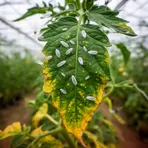
Small insects called whiteflies that suck plant sap and harm crops

A small white insect that lives in greenhouses and eats plant sap
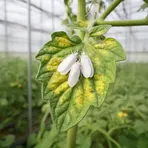
A small white insect that lives on and damages greenhouse plants
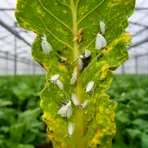
A small white insect like a tiny fly that feeds on plants and can damage crops

A very small white insect called a whitefly that often damages crops
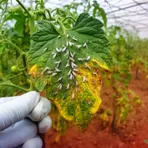
A small whitefly that feeds on and harms many crop plants

A small insect that attacks sweet potatoes and other crops and spreads plant viruses

A small white insect that eats leaves of citrus trees and weakens them
Compounds
- Specialized
A small white insect that eats leaves of citrus trees and weakens them
- Specialized
A small white insect that lives in greenhouses and eats plant sap
- Specialized
A small insect that attacks sweet potatoes and other crops and spreads plant viruses
Surface Forms
Morphology
Etymology
Whitefly: The word white ('the color') + fly ('a small flying insect') names the tiny white bugs that fly around and feed on plant sap, so the name helps you remember they are small white flying pests.