
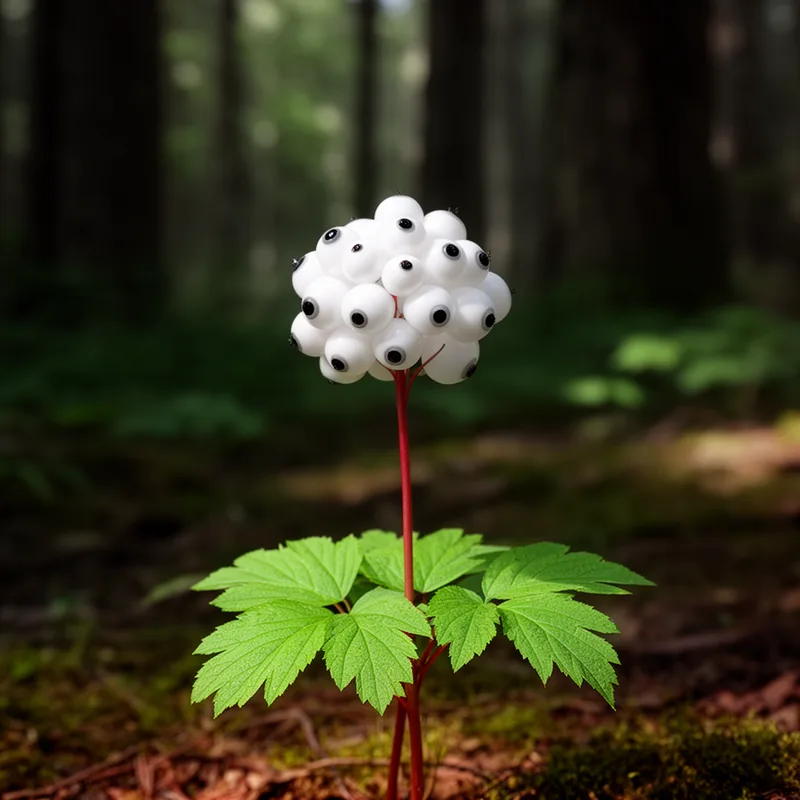
white baneberry
- noun
- /ˈwaɪt ˈbeɪnˌbɛri/
- Specialized
- The white baneberry is sometimes called 'doll's eyes' due to the appearance of its fruit.
Examples
-
Hikers often admire the striking appearance of the white baneberry in the forest understory.
-
The white baneberry grows in shady forest areas.
-
Children should never touch the white baneberry plant because its berries are highly toxic.
-
Many hikers are unaware of the dangers of white baneberry.
-
The garden was filled with various flowers, but the most striking was the white baneberry with its clusters of bright, white berries.
-
Many hikers are cautioned against eating the berries of the white baneberry, as they are highly toxic to humans.
-
During our nature walk, we discovered a patch of white baneberry, which is known for its dangerous little white berries.
Synonyms

A North American plant with white, poisonous berries like small eyes

A forest plant with small round white berries that look like eyes and are poisonous

A North American plant with white poisonous berries that look like small balls
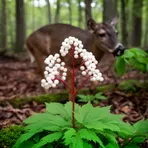
A plant from North America with white poisonous berries
Surface Forms
Morphology
The noun phrase is a straightforward adjectival modification: 'white' simply specifies the color of 'baneberry', so a learner who knows both words will understand it refers to the white variety of the plant/berry. This adjective+noun compositional pattern is cross-linguistically common and follows transparent semantic combination, making it immediately comprehensible to B1 learners.
Etymology
White baneberry gets its name from what you see and a warning: white for the pale colour, bane meaning 'deadly', and berry showing it is a fruit. Because the round white fruits look like doll's eyes and are 'poisonous', the name reminds us the plant is dangerous.

