

Actaea alba
- noun
- Specialized
- Hikers should be cautious not to touch the berries of Actaea alba as they are highly toxic.
Examples
-
The white, eye-like berries of Actaea alba make it easy to identify in the forest.
-
The Actaea alba is often found in shady forests.
-
Botanists conducted a study on the distribution of Actaea alba in North America.
-
Have you ever seen Actaea alba in the wild?
-
Hikers should be cautious not to touch the berries of Actaea alba as they are highly toxic.
-
The white, eye-like berries of Actaea alba make it easy to identify in the forest.
-
Botanists conducted a study on the distribution of Actaea alba in North America.
Synonyms
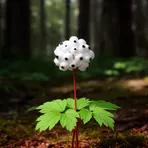
A forest plant with white poisonous berries that look like small round eyes

A forest plant with small round white berries that look like eyes and are poisonous

A North American plant with white poisonous berries that look like small balls
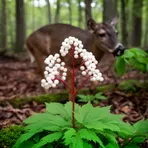
A plant from North America with white poisonous berries

A plant that grows in woods with clusters of small poisonous berries
Surface Forms
Morphology
Actaea + alba
The name follows standard binomial (genus + epithet) composition: if a learner knows 'Actaea' is a plant genus and 'alba' (Latin) means 'white', they can infer this refers to the white species/variety of Actaea. Taxonomic naming is compositional and cross-linguistically regular, so the meaning is directly derivable from the constituents.
Etymology
Actaea alba may come from an old Greek plant name, and the second word alba means 'white' in Latin. The name points to the plant's bright, eye-like berries, so it refers to the white, poisonous 'doll's eyes' you can see in North American forests.

