
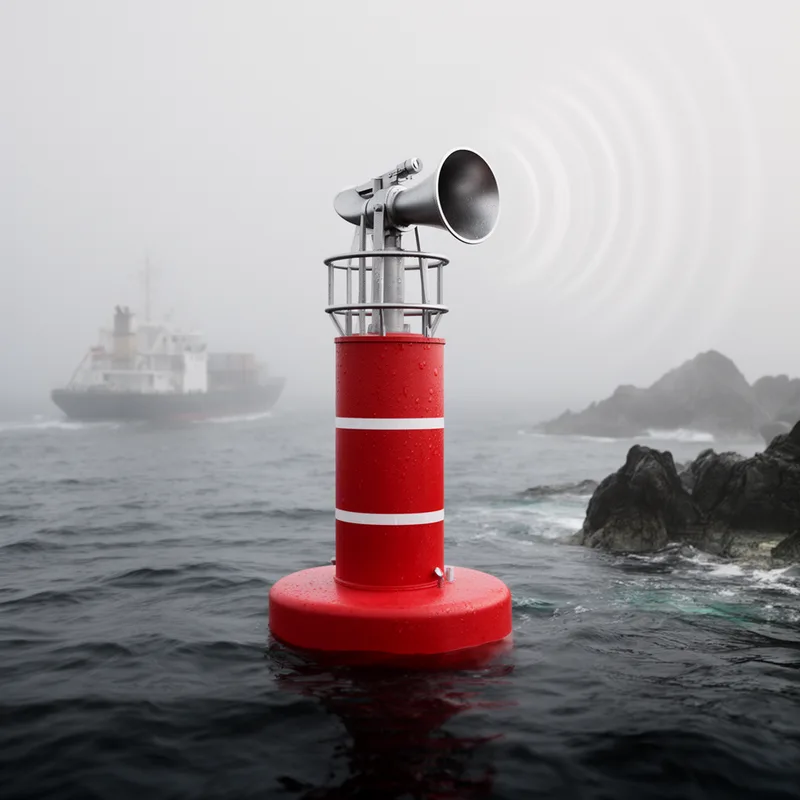
whistling buoy
- noun
- /ˈhwɪslɪŋ ˈbuːi/
- Specialized
 :
boya silbante
:
boya silbante
- The captain navigated carefully past the whistling buoy marking the entrance to the harbor.
Examples
-
Several whistling buoys are placed along the coastline to help ships avoid shallow waters.
-
As the fog rolled in, the sound of the whistling buoy grew louder, guiding the sailors safely.
-
The whistling buoy alerted sailors to the rocks nearby.
-
Have you seen the whistling buoy at the entrance of the harbor?
-
As the fog rolled in, the sound of the whistling buoy grew louder, helping the sailors find their way safely.
-
Several whistling buoys are positioned along the coastline to warn ships of hidden dangers.
-
The captain followed the sound of the whistling buoy to navigate through the narrow channel.
Synonyms
 49
6.0
49
6.0

A floating object anchored in water that marks safe routes and hazards

A floating marker that makes a loud sharp sound to guide ships

A floating marker that makes sound to help ships find their way
How Loud


Surface Forms
Morphology
The compound is directly compositional: 'whistling' (producing a whistle sound) modifies 'buoy' (an anchored floating marker), so a buoy that emits a whistling sound is immediately inferable. This present‑participle adjective + noun pattern is a regular, cross‑linguistic construction, making the meaning accessible to a B1 learner who knows both words.
Etymology
The noun whistling buoy comes from a simple picture: a floating buoy that makes a high whistling sound when wind or waves pass through a small pipe, so sailors can hear it in fog. That's why a whistling buoy means 'a floating marker that makes a whistle to warn or guide ships'.