
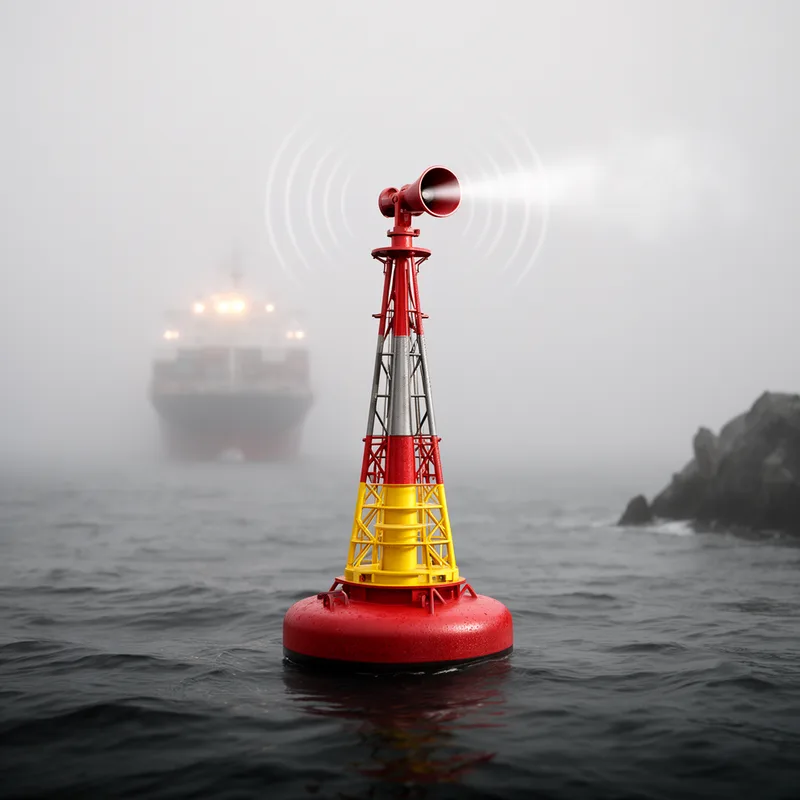
whistle buoy
- noun
- /ˈwɪsəl buːi/
- Specialized
- Maintenance crews checked the whistle buoy to ensure its signal was loud and clear.
Examples
-
The captain spotted a whistle buoy marking the entrance to the harbor.
-
The whistle buoy marked the entrance to the harbor.
-
In heavy fog, the sound of the whistle buoy alerted sailors to nearby hazards.
-
Many whistle buoys are placed along the coastline.
-
The sailor relied on the whistle buoy to navigate safely through the fog.
-
As we approached the harbor, we could hear the sound of the whistle buoy guiding us.
-
During the storm, the whistle buoy helped the ships find their way back to safety.
Synonyms
 49
6.0
49
6.0

A floating object anchored in water that marks safe routes and hazards

A floating marker that makes a whistling sound to warn ships of danger

A floating marker that makes sound to help ships find their way
How Loud


Surface Forms
Morphology
The meaning is directly and transparently derived from combining 'whistle' (a high, piercing sound or device that makes such a sound) with 'buoy' (an anchored floating marker): it denotes a buoy that whistles. This simple noun-compound composition is common and cross-linguistically predictable, so a B1 learner who knows both constituents will readily infer the meaning.
Etymology
Whistle buoy comes from a floating buoy with a small whistle that the wind or waves made sound, so in fog sailors could hear it and know where to go. That's why a whistle buoy is a sea marker used to 'warn' ships and 'guide' them.