

western ragweed
- noun
- /ˈwɛstərn ˈræɡˌwiːd/
- Specialized
- Western ragweed thrives in dry, rocky soils where few other plants can survive.
Examples
-
Farmers in Texas often battle western ragweed because it competes with their crops for water.
-
The botanist collected samples of western ragweed to study its resistance to drought.
-
The western ragweed thrives in dry areas.
-
Many gardeners dislike western ragweed for its invasiveness.
-
Western ragweed grows abundantly in the arid conditions of the southwestern United States.
-
In the desert landscape, western ragweed often dominates the sparse vegetation.
-
Hikers in the region are familiar with western ragweed as a common sight in dry, barren areas.
Synonyms

 4
6.1
4
6.1

A tall wild plant that makes many people sneeze from its pollen
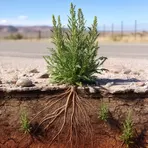
A rough plant that lives for many years and spreads with deep roots in dry places

A rough plant with spreading roots that lives year after year in dry open land
Surface Forms
Morphology
The noun phrase is a straightforward adjective + noun composition: 'western' (from the west) modifies 'ragweed' (the plant), so a learner who knows both words can infer it denotes ragweed found in western regions. This regional variety naming pattern is common cross-linguistically and therefore immediately comprehensible to B1 learners.
Etymology
Western ragweed is a name made of two simple parts: ragweed may come from the plant's rough, ragged leaves that look like 'torn cloth', and western shows it comes from the western parts of North America. So the name creates a clear picture of a coarse, hardy plant that grows in dry western areas.