
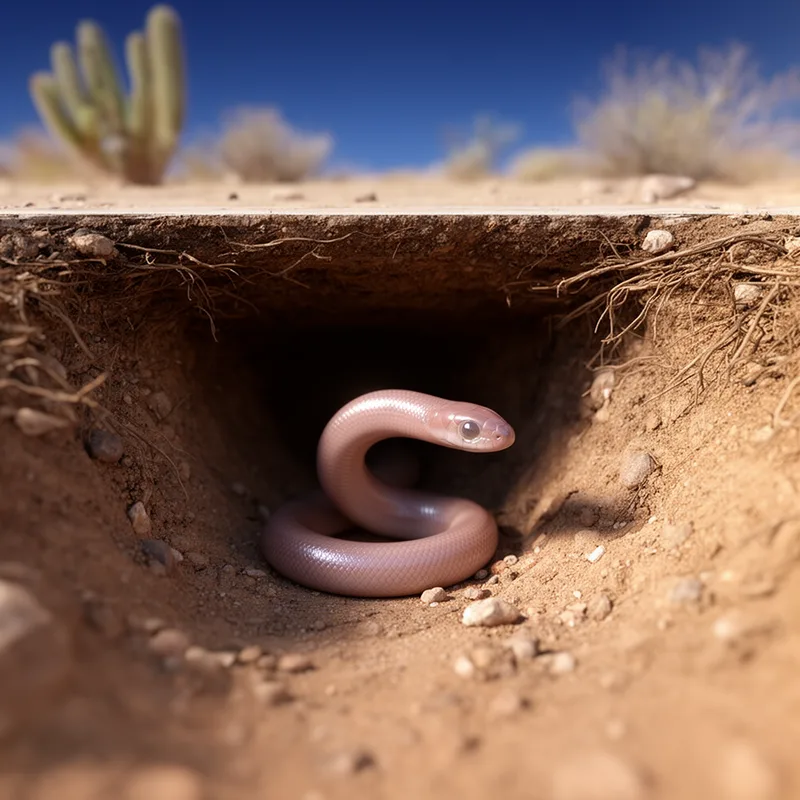
western blind snake
- noun
- /ˈwɛstərn blaɪnd seɪk/
- US
- The western blind snake spends most of its life underground, emerging only at night or after rain.
Examples
-
You can occasionally find a western blind snake beneath rocks or debris in arid regions of California.
-
A western blind snake may be mistaken for a worm due to its shiny, slender body.
-
The western blind snake is often found in sandy areas.
-
Many people have never seen a western blind snake.
-
The western blind snake spends most of its life underground in dry habitats, coming out mainly at night.
-
In the deserts of the western United States, the western blind snake can be found burrowing through loose soil.
-
If you dig carefully in sandy areas, you might discover a western blind snake hiding beneath the surface.
Synonyms

A very small snake that lives underground in deserts and dry sandy places in the western United States

A small snake that looks like a worm and lives underground
Surface Forms
Morphology
The meaning is directly compositional: 'snake' is the head noun modified by 'blind' (without sight) and 'western' (from the western region), so a learner who knows these words will understand it refers to a snake in the western area that is blind or has reduced sight. This adjective + adjective + noun pattern is a standard, cross-linguistically common way to form descriptive names and contains no idiomatic shift, so it is immediately comprehensible to B1 learners.
Etymology
Western blind snake describes three simple facts: it is a small snake, it looks blind because its eyes are tiny and covered, and it comes from the western United States. So the name points to a little underground snake from the 'west' with very poor sight.

