

to waver
 12
4.8
12
4.8

- verb
- /ˈweɪvər/
- For weeks after Andzia's departure, he wavered between rage and depression, dragging himself to work like an automaton.
- the voice wavered
- the light wavered
- the flame wavered
Loading YouTube…
Watch on YouTubeIt came out of the gathering darkness wavered tragically for a moment and then disappear around next Ben.
- It came out of the gathering darkness wavered tragically for a moment and then disappear around next Ben.
Examples
-
A few candles guttered and dripped on some of the tables, casting wavering shadows around the room.
Fiction book (1992) -
On the water's surface, the image of the trees began to waver with each ripple.
-
Bagratian's men began to waver and then retreat.
-
I remembered how his writing had wavered across the page.
Fiction book (1994) -
"Can you hear me now?" The face in the screen wavered and faded.
Fiction book (1992) -
A lone figure appears on the horizon, wavering like a mirage.
Fiction book (1994) -
An airplane buzzes overhead, hidden by branches, burrs of butternuts clustered, leaves wavering in the wind.
Fiction book (1992) -
The candle's flame began to waver as the wind blew through the open window.
-
As the athlete approached the finish line, his legs started to waver from exhaustion.
Synonyms
 916
1.0
916
1.0
To move quickly from side to side or up and down
 164
2.5
164
2.5
To shake slightly without control because of fear, cold, or worry
 115
1.2
115
1.2
To shake slightly because of cold, fear or excitement
 91
2.8
91
2.8
To make very small, quick moves back and forth
 85
3.7
85
3.7
To shake suddenly because you feel cold, afraid, or very upset
 77
2.4
77
2.4
To move slowly from side to side in a gentle rhythm
 60
3.6
60
3.6
Move or shine in quick unsteady ways
 47
4.5
47
4.5
To shake in small, quick movements because of fear, cold, or excitement
 40
3.8
40
3.8
To move or shake unsteadily from side to side
 35
3.5
35
3.5
To move quickly and lightly back and forth, like wings or leaves
 4
5.6
4
5.6
To move or lean in a way that looks like it might fall
 3
8.1
3
8.1
To make a voice or note sound shaky from nerves
 2
4.6
2
4.6
To shake or move quickly because you are nervous
 1
7.4
1
7.4
To shake slightly with quick movements


 1
6.9
1
6.9
To move quickly and lightly, like a small bird or moth
 1
8.4
1
8.4
Shake quickly and strongly, often making a loud noise
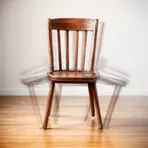
To move unsteadily from side to side

To move unsteadily while rolling from side to side

Move back and forth a little before stopping

To shake slightly, often because of cold or strong feeling
Antonyms

Phrasal Verbs

Compounds

- Offensive
A person who shows strong support for their country often in aggressive ways

How Unsteady

Surface Forms
Morphology
Etymology
Waver comes from the old word wave, which meant 'to move back and forth', giving the picture of a flag or light that shakes in the wind. So when a sound, signal, or person wavers, it moves or trembles and becomes unsteady.