
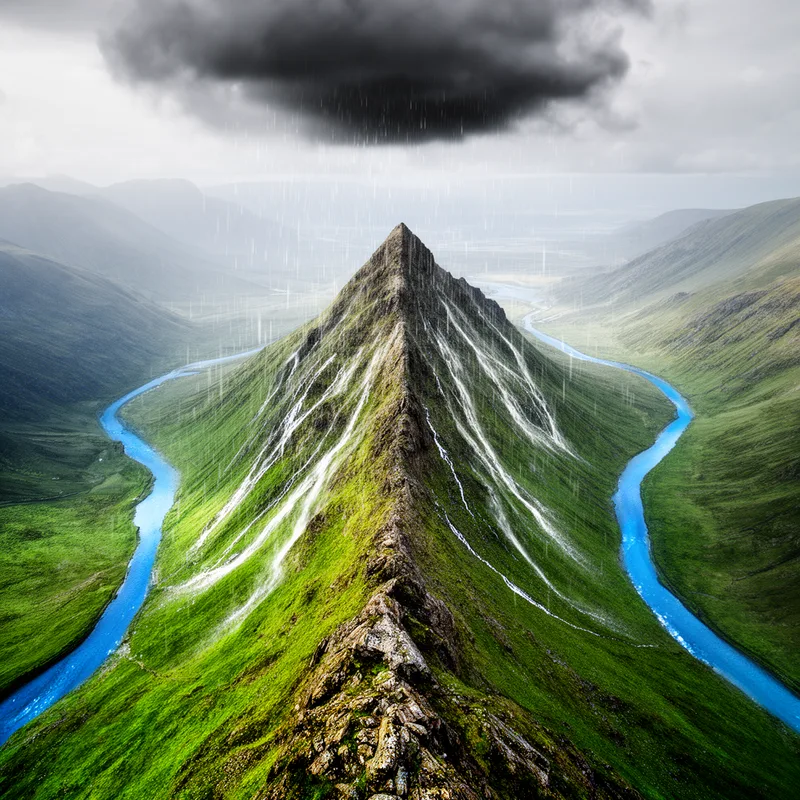
water parting
- noun
- /ˈwɔːtər ˈpɑːrtɪŋ/
- Specialized
- The Continental Divide is a famous water parting in North America.
Examples
-
Heavy rainfall on either side of the water parting drains into different seas.
-
Geographers marked the water parting clearly on the topographic map.
-
The water parting is fascinating.
-
Look at that water parting!
-
The Continental Divide marks the most well-known water parting in North America, guiding rivers to different coasts.
-
Geographers marked the water parting clearly on the topographic map to show where water flows into separate drainage basins.
-
Heavy rainfall on either side of the water parting drains into different seas, affecting local ecosystems.
Synonyms

 16
7.6
16
7.6

A high line of land that makes rivers flow to different seas
 16
6.1
16
6.1
An area of land where rain flows into one river
How Big
- Specialized
1
7.4

- Specialized
16
6.1
- Specialized
16
7.6
- Specialized
4
6.0
Surface Forms
Morphology
The noun combines 'water' (flows/streams) with 'parting' (an act or place of separating), so it literally denotes a place where waters are divided — i.e. a divide or watershed. Although somewhat technical and not highly frequent, the meaning is compositionally clear and parallels common cross‑linguistic terms, so a B1 learner who knows the constituents can reasonably infer the sense.
Etymology
Water parting comes from a simple image: at a high ridge the water 'parts' and runs in different directions, so drops on one side go to one river or sea and drops on the other side go to another. That's why water parting means 'the ridge or line that divides two river systems'.