

to wash up
 41
1.1
41
1.1

- phrasal verb
- /wɔʃ ʌp/
- UK
- Make sure to wash up well, he said.
- wash up the dishes
- help wash up
- wash up at the sink
Loading YouTube…
Watch on YouTubeSee, the first one I saw that I was like, OK, yeah, no, I need to go do the washing up.
- See, the first one I saw that I was like, OK, yeah, no, I need to go do the washing up.
Examples
-
I'm happy for you to, like, go and do that, but just once you're done, can you then please, you know, wash up, OK?
-
It's your turn to wash up the dishes tonight after we finish our meal.
-
Time to wash up, you guys.
-
Let me help you wash up!
-
You want to do what has to be done and then wash up and leave.
Fiction book (1995) -
Rather than try to talk, he went into the bathroom to wash up.
Fiction book (2002) -
I'll wash up and meet you in the waiting room.
-
And could you wash up the dishes?
-
The sun rises, children go to school, housewives wash up the breakfast dishes, and shop owners open their stores.
Academic text (2016) -
That's just plain common," Udell said, as she cleared away the food and began washing up.
Fiction book (1990)
Synonyms
 52
1.0
52
1.0
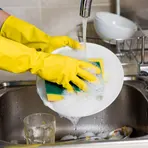
To wash plates, cups, and other things used for eating after a meal
 42
1.0
42
1.0
To clean plates, bowls, and cups after a meal
Antonyms

How Clean

Surface Forms
Morphology
wash + up
The political noun 'wash up' is a metaphorical extension of the literal components: 'up' signals completion and 'wash' suggests clearing away, so there is a partial compositional clue (clearing/finishing work). However, the specific meaning—an end-of-session period for hurried parliamentary deals—is specialized British political jargon and not directly predictable from the constituents by a B1 learner without prior exposure.
Etymology
The phrasal verb wash up comes from the simple act of cleaning after a meal: you wash the plates and tidy up, so it means 'to wash the dishes'.