
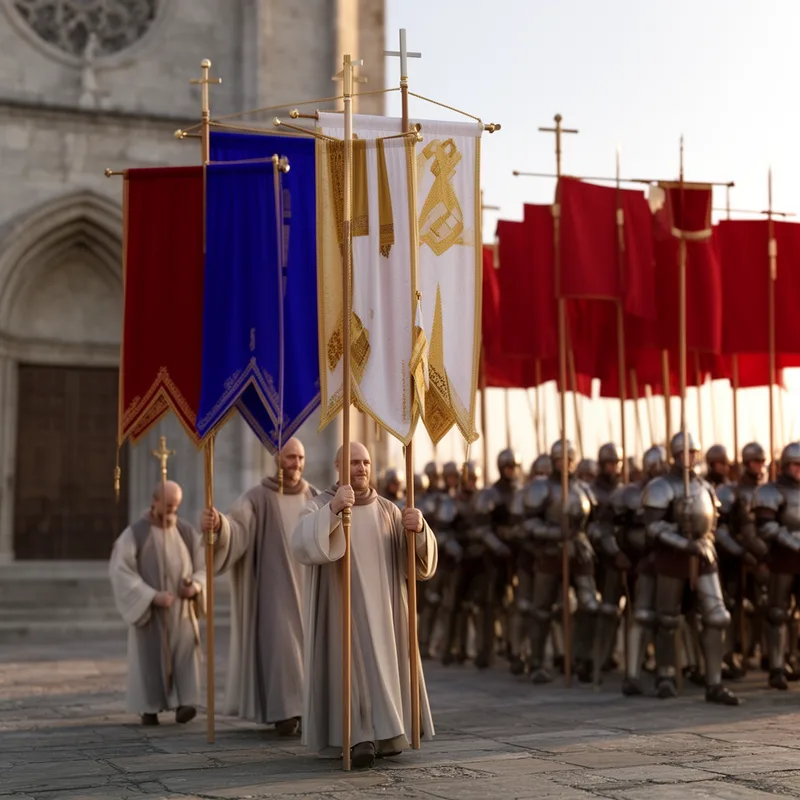
vexilla
- noun
- /vɛkˈsɪlə/
- Archaic
- Legionary detachments and auxiliary units also carried vexilla, standards topped by a flag denoting their unit.
Examples
-
In addition to the metal, wood, and glass artifacts, there were also traces of vexilla, the small pieces of cloth flown on top of poles that closely resemble modern flags.
Academic text (2007) -
During the religious procession, various vexilla were carried by the clergy to represent different saints.
-
The Roman soldiers proudly displayed their vexilla on the battlefield, signaling their allegiance to the empire.
-
The museum showcased ancient artifacts, including vexilla that illustrated the rich history of Roman military banners.
Synonyms

 191
1.2
191
1.2

A long strip with a sign used to decorate or advertise

A flag used by Roman soldiers or the large top petal of pea flowers
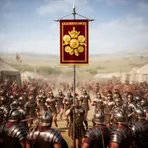
A pole with a banner that a Roman unit uses to show who they are and help soldiers gather
Surface Forms
Etymology
Vexilla is the plural of the Latin vexillum, which meant a small 'flag' or 'banner' used by Roman soldiers and in church ceremonies. So, vexilla are simply old-style 'flags' carried as signs or symbols of a group.