
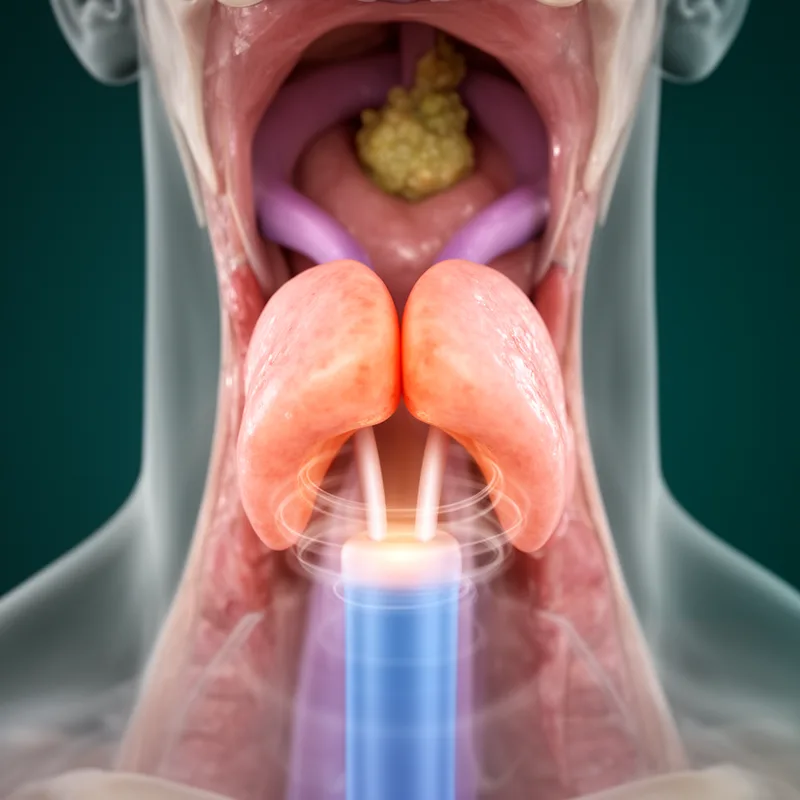
vestibular fold
- noun
- /vɛˈstɪbjʊlər foʊld/
- Specialized
- Unlike the true vocal cords, the vestibular fold does not generate sound but serves other important functions.
Examples
-
In the past, only laryngeal candidiasis involving vestibular folds has been described in Down syndrome patients.
Academic text (2008) -
During the examination, the specialist checked the vestibular folds to ensure there were no abnormalities.
-
The doctor explained that the vestibular fold plays a role in protecting the larynx from foreign objects.
Synonyms


 1
8.9
1
8.9
An upper fold of tissue in the throat that does not make sound

One of two thin pieces of tissue above the voice box that do not make sound
Upper throat folds that protect the airway but do not make sound

A thin piece of tissue in the throat above the vocal cords that usually does not make sound
Surface Forms
Morphology
The meaning ('false vocal cord' — an upper mucous fold in the larynx) is not derivable from the usual B1 sense of 'vestibular' (connected to the inner ear and balance) plus 'fold' (a crease). 'Vestibular' here uses a specialized anatomical sense (relating to a vestibule of the larynx), so learners who only know the common meanings would not predict this MWE's meaning.
Etymology
Vestibular fold The name vestibular fold puts together vestibular, a word for 'entrance', and fold, a flap of tissue, so it gives the image of a small door before the true vocal cords. Because of this position, the 'false vocal cord' does not make speech but helps protect the airway.