
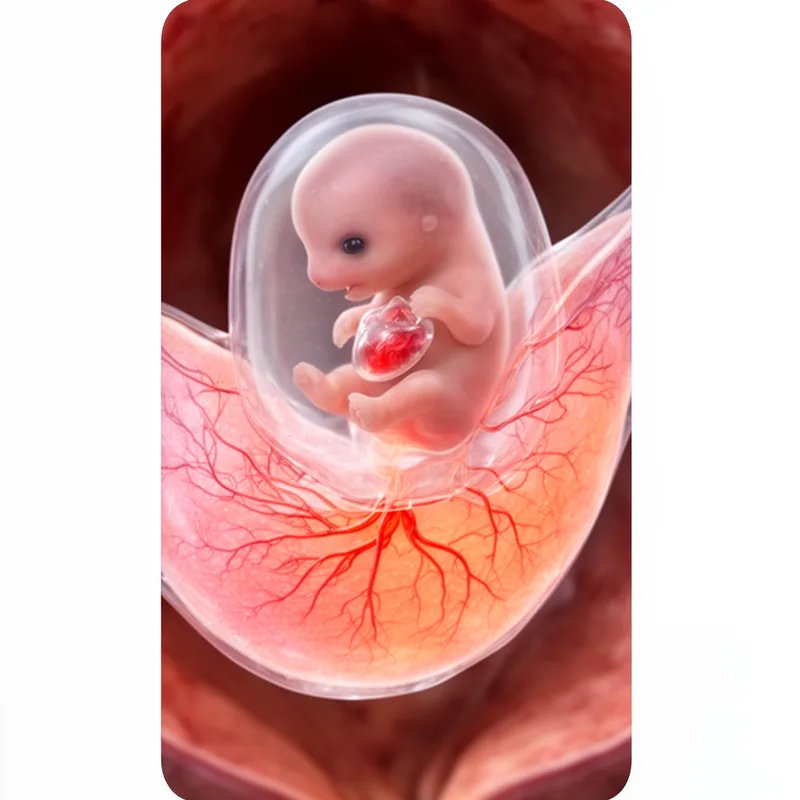
vesicula umbilicus
- noun
- Specialized
- The vesicula umbilicus plays a vital role in the early development of mammalian embryos.
Examples
-
Researchers observed changes in the vesicula umbilicus as the embryo's heart began to function.
-
The vesicula umbilicus serves as the primary circulatory structure in mammalian embryos until the heart develops.
-
Defects in the vesicula umbilicus can disrupt embryonic blood circulation before the heart forms.
-
The vesicula umbilicus is vital.
-
The vesicula umbilicus connects embryos to their mothers.
-
Defects in the vesicula umbilicus can disrupt the flow of nutrients in an embryo before the heart is formed.
-
During early embryonic development, the vesicula umbilicus is essential for transporting oxygen and nutrients.
Synonyms


 1
7.4
1
7.4
A thin bag in animal embryos that holds the yolk, gives food, and helps make blood
A small sac in early mammal embryos that carries blood and nutrients before the heart works

A thin bag in early embryos that carries blood and nutrients before the heart works
Surface Forms
Morphology
vesicula + umbilicus
If a learner knows the constituents (vesicula ≈ ‘vesicle’, a small sac, and umbilicus ≈ ‘navel/umbilical’), they can infer this refers to a small sac associated with the umbilical region, so the basic referent is compositional. However, the precise embryological function (a temporary circulatory role until the heart functions) is specialized medical information not fully predictable from the parts alone, so the transparency is only partial.
Etymology
Vesicula umbilicus comes from the Latin words vesicula meaning 'little sac' and umbilicus meaning 'navel'. It names a tiny sac near an embryo's navel that carries blood until the heart starts, so the phrase now means a temporary early blood-carrying structure.