
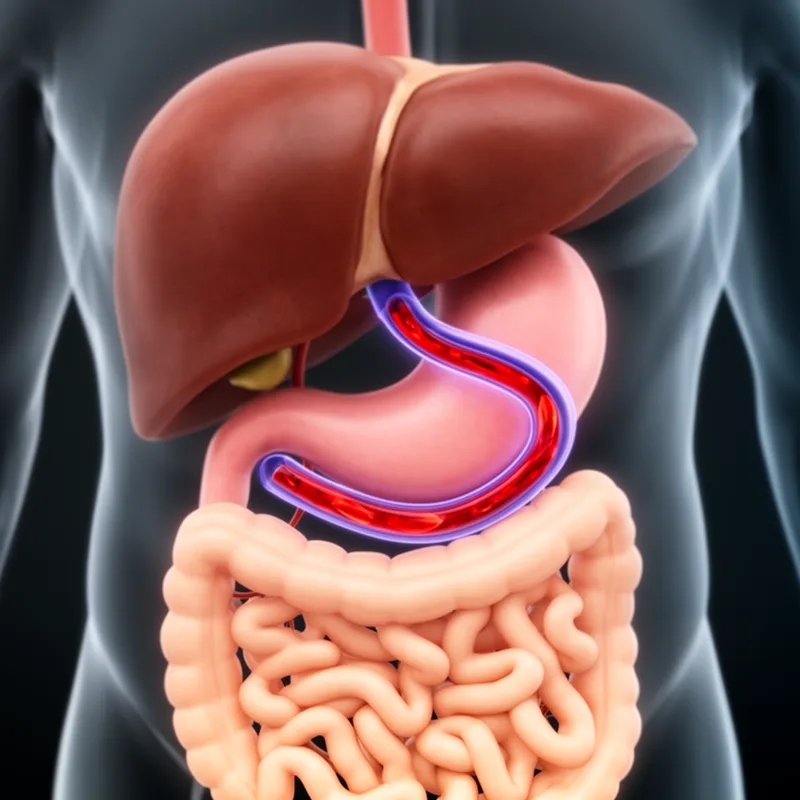
vena portae
- noun
- /ˈviːnə ˈpɔːrteɪ/
- Specialized
 :
vena porta
:
vena porta
- The vena portae delivers nutrient-rich blood to the liver for processing.
Examples
-
A blockage of the vena portae can lead to serious medical complications like portal hypertension.
-
Surgeons carefully examined the patient's vena portae before proceeding with the liver transplant.
-
The vena portae transports blood from the intestines.
-
Surgeons often examine the vena portae during operations.
-
The vena portae carries blood from the stomach and intestines to the liver, where nutrients are processed.
-
A healthy vena portae is essential for the liver to filter and manage blood from the digestive organs.
-
When performing a liver biopsy, doctors pay special attention to the vena portae to avoid complications.
Synonyms
 6
8.1
6
8.1

A short vein that carries blood from the intestines to the liver
 1
4.3
1
4.3
A short blood vessel that carries blood from the stomach and intestines to the liver

A short vein that carries blood from the stomach and intestines to the liver
Surface Forms
Morphology
vena + portae
The first constituent 'vena' transparently denotes a vein, but 'portae' is Latin (genitive of 'porta', ‘gate/portal’) and functions as a technical anatomical marker; together they signal a ‘portal vein’ but do not transparently specify the precise function (blood from digestive organs to the liver) to an average B1 learner. The term is partially compositional for learners familiar with Latin/medical roots but remains specialized and not fully predictable from everyday word knowledge, so it is only partially transparent.
Etymology
Vena portae comes from Latin words vena meaning 'vein' and portae meaning 'gate', so it paints the picture of a gate that blood passes through into the liver. That's why the term refers to the short vein that carries blood from the stomach and intestines to the liver.