

vena cava
 5
4.9
5
4.9

- noun
- /ˈviːnə ˈkeɪvə/
- Specialized
- The inferior vena cava carries blood from the lower body back to the heart.
- the inferior vena cava
Examples
-
Then... a three-foot catheter threaded directly into the inferior vena cava, or the superior vena cava.
-
Then... a three-foot catheter threaded directly into the inferior vena cava, or the superior vena cava.
-
The aorta, the vena cava.
-
Vena cava
-
At 24 hours following CLP, blood samples were drawn from the inferior vena cava and cultured to evaluate the bacterial clearance.
Academic text (2018) -
Since our patient had no metastasis to the lung or liver, his disease had probably spread via the vertebral plexus and not the inferior vena cava.
Academic text (2001) -
These small veins called venules, merge to form larger veins, eventually very large veins like the vena cava, which come back to the right side of the heart.
-
Volume depletion in the circulating compartment can be assessed by ultrasonographic measurement of the diameter and collapsibility of the inferior vena cava.
Academic text (2016) -
Abdominal ultrasound showed prominent inferior vena cava and dilated hepatic veins with minimal ascites.
Academic text (2007) -
Surgeons need to be careful when operating near the vena cava to avoid serious bleeding.
Synonyms
 6
7.5
6
7.5
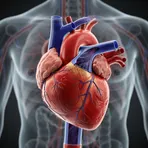
One of the two large veins that carry blood without oxygen to the heart
How Big
- Specialized
5
4.9

- Specialized
239
2.6
- Specialized
- Specialized
- Specialized
11
4.8
Surface Forms
Morphology
Both constituents are literal anatomical terms (vena = vein; cava = major/hollow vein), so the compound denotes a (large) vein that carries blood to the heart. The phrase is non-idiomatic and compositional (and appears across languages in medical terminology), so a learner who knows the parts can infer the basic meaning.
Etymology
Vena cava comes from the Latin words vena meaning 'vein' and cava meaning 'hollow', so the phrase gives the picture of a very large hollow vein. That's why the name means 'a large hollow vein that carries blood back to the heart'.