
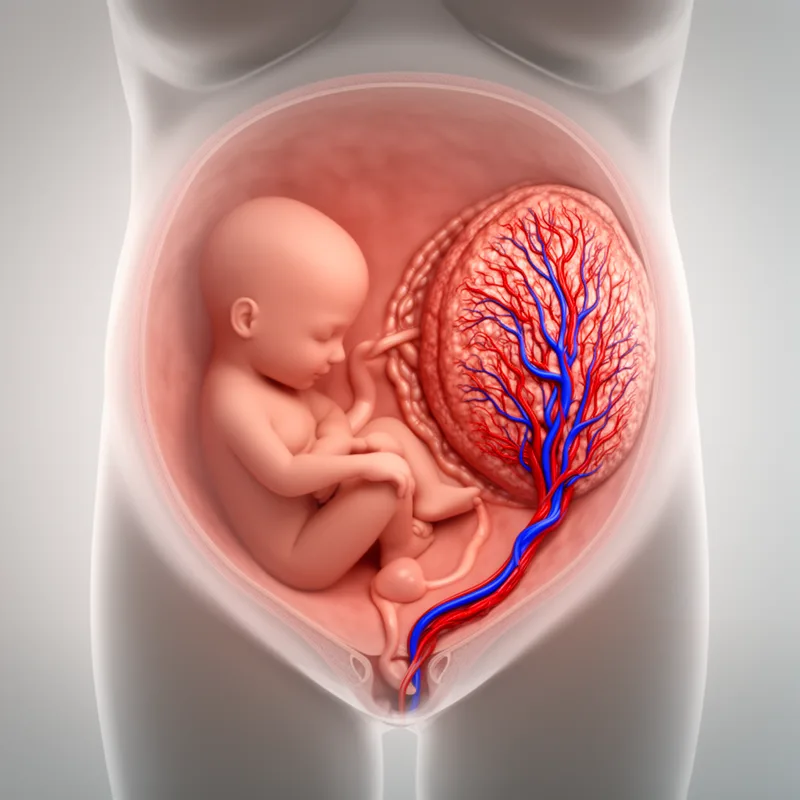
uteroplacental


 1
8.2
- adjective
- /ˌjuːtərəʊpləˈseɪntl/
- Specialized
- The study examined how uteroplacental blood flow affects fetal development.
Examples
-
Extravillous trophoblast invasion is highly regulated and is critical to establishing physiologic uteroplacental blood flow.
Blog text (3) -
The greatly increased risk of stillbirth in women with deficiencies of antithrombin, protein C, and protein S strongly suggests the possibility of uteroplacental insufficiency as a causative factor.
Academic text (1999) -
Uteroplacental blood flow and fetal growth
Blog text (3) -
This process of implantation is completed by the end of the second week, at which time there is "primitive uteroplacental circulation."
Academic text (1990) -
Doctors focused on uteroplacental interactions to improve pregnancy outcomes.
-
Research into uteroplacental connections can lead to better understanding of maternal health.
Surface Forms
Morphology
Etymology
The word uteroplacental combines utero- ('womb') and placenta ('organ that feeds the baby before birth'), so it describes how the mother's womb and placenta work together.