
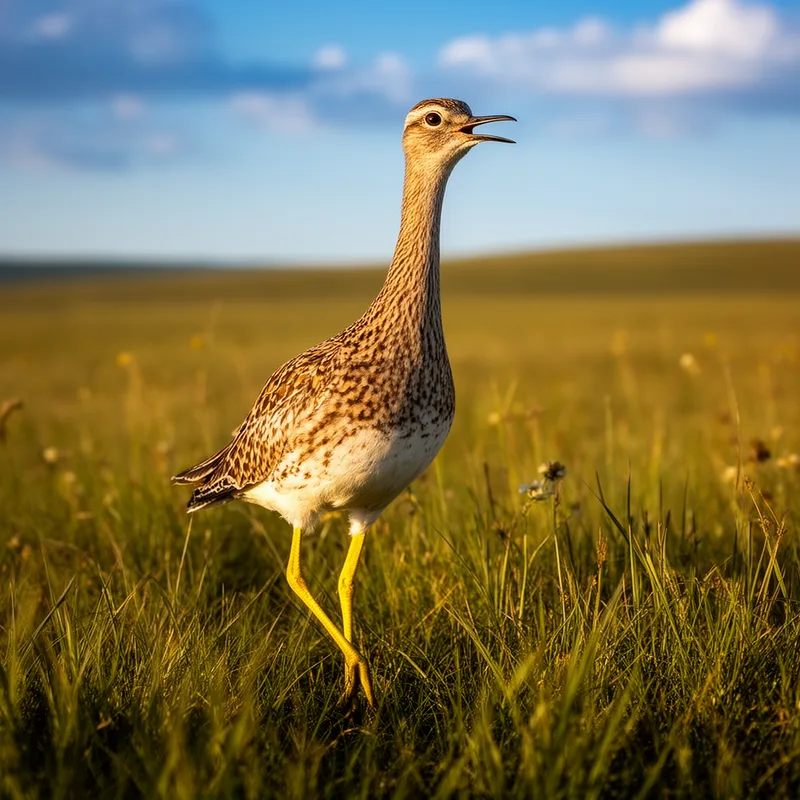
upland sandpiper
- noun
- /ˈʌplənd ˈsændˌpaɪpər/
- US
- I spotted an upland sandpiper in the field yesterday.
Examples
-
The upland sandpiper is known for its distinctive call.
-
The upland sandpiper is easily identified by its long neck and yellow legs.
-
Conservationists are working to protect habitats favored by the upland sandpiper.
-
We spotted an upland sandpiper walking through the tall grass of the prairie.
-
The upland sandpiper prefers to nest in fields and open uplands where it can find plenty of insects.
-
During migration, the upland sandpiper can often be seen foraging in short grasslands for food.
-
Conservation efforts are underway to protect the habitats of the upland sandpiper in North America.
Synonyms

A large bird like a plover that lives in North American fields and meadows

A large brown bird with long legs that lives in open North American fields
A large bird like a plover that lives in North American grasslands
Surface Forms
Morphology
The meaning — a sandpiper that inhabits upland fields — is directly and compositionally derived from 'upland' (higher land) + 'sandpiper' (a type of shorebird). This place+noun compound follows ordinary English composition patterns and a B1 learner who knows both words would readily infer the species lives in upland areas, so the MWE is transparent.
Etymology
Upland sandpiper comes from two simple images: upland means higher dry ground like 'fields' or 'prairies', and sandpiper is a type of long-legged bird often seen on sand or beaches. So the name points to a sandpiper-like bird that lives and walks in dry fields, which is why it refers to the large bird found on North American uplands.

