
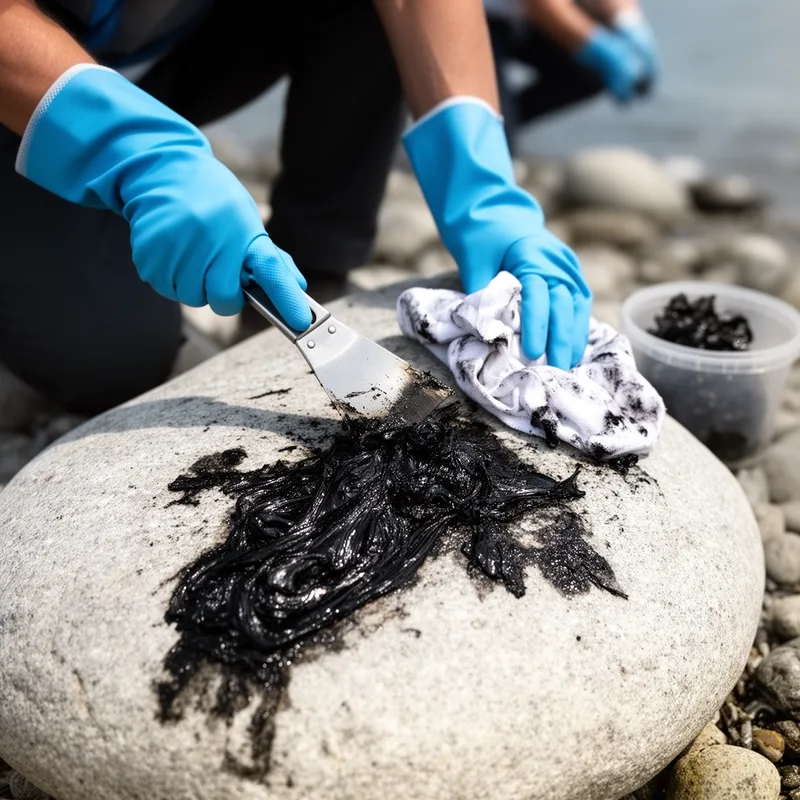
to untar
- verb
- /ʌnˈtɑr/
- She carefully untarred the fence posts to remove the sticky residue before repainting.
Examples
-
After the spill, the volunteers untarred the rocks along the shoreline to protect the wildlife.
-
The workers untarred the old railroad ties before reusing them in the garden.
-
I need to untar this old roof.
-
Can you help me untar this sticky mess?
-
The workers untarred the old railroad ties before reusing them in the garden.
-
She carefully untarred the fence posts to remove the sticky residue before repainting.
-
After the spill, the volunteers untarred the rocks along the shoreline to protect the wildlife.
Synonyms

 52
1.0

To remove dirt or mud from a surface
Surface Forms
Morphology
Etymology
Untar comes from the prefix un- meaning 'remove' (as in untie) and tar, the sticky black material used on roads and roofs. So to untar something is to clean or scrape the tar off, which is why the word means removing tar from a surface.