
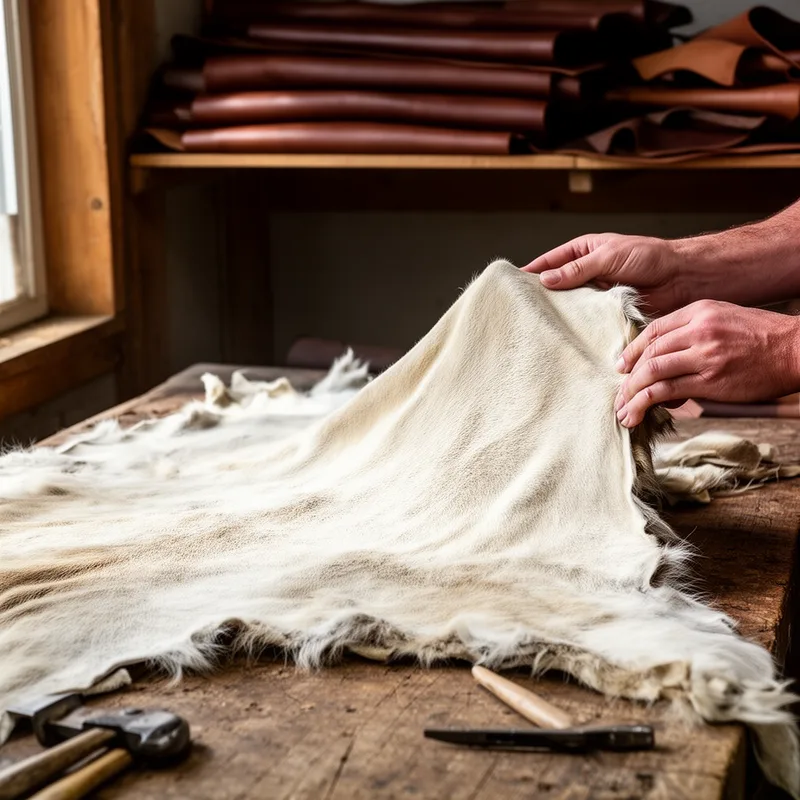
untanned


 1
8.4
1
8.4
- adjective
- /ʌnˈtænd/
- Specialized
- Being tanned is considered attractive. For instance, Berwick, Fine, and Bolognia (1992) recently found that 72% of respondents believed that tanned skin looks more attractive than untanned skin.
- untanned skin
Examples
-
Before dyeing, untanned leather is often used in craft projects.
-
An untanned skin area is healthy skin.
Blog text (9) -
She's pale, untanned, in the green grass.
Fiction book (1998) -
This difference means that an untanned person with fair skin may become sunburnt within 25 minutes at noon (depending on latitude and time of the year), but would have to lie in the sun for at least two hours to receive the same dose after three p.m. (5).
Academic text (1998) -
Heavy, unfired clay pots, untanned furs, and some eating utensils chipped out of hardwood.
Fiction book (1993) -
They are curled and faded, some of them creased, but you can still make out the pattern in the ivory bedspread, still see the tanned and untanned patches on our naked bodies.
Fiction book (1995) -
The untanned area of the hide is still soft and supple.
-
She preferred to wear fabrics that felt like untanned skin against her body.
Antonyms
Surface Forms
Morphology
Etymology
Untanned is made from the prefix un- meaning 'not' and tan meaning 'to treat a hide so it becomes leather'. So an untanned hide is 'not turned into leather', which is why it stays soft but is not as strong as leather.