
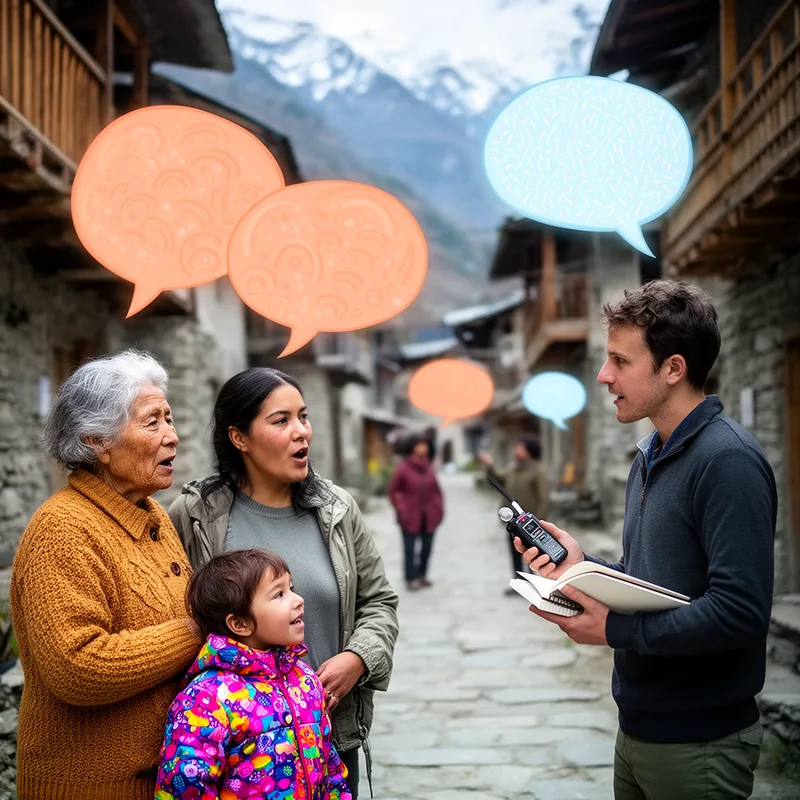
unique dialect
- noun
- /juˈnik ˈdaɪəlekt/
- "Investigators with the Manhattan district attorney's office learned the call had been recorded and had it translated from a "unique dialect of Fulani," a language from the woman's native country, Guinea, according to a well-placed law enforcement official.
Examples
-
The book includes a chapter on the unique dialect spoken in the Scottish Highlands.
-
Researchers studied a unique dialect that developed among the fishing communities along the coast.
-
Her hometown has a unique dialect that incorporates many words from the indigenous language.
Synonyms

 63
4.8
63
4.8

A form of language used in one area or group with its own words, grammar, and sounds
 20
6.8
20
6.8
The everyday language that ordinary people in a particular place speak
 3
9.9
3
9.9
A way of speaking that people in a place or group use, different from the standard language
 1
7.4
1
7.4
A way of speaking used by people in one area
Antonyms

How Distinctive
 1
7.4
1
7.4
Surface Forms
Morphology
Both constituents 'unique' (distinctive, one of a kind) and 'dialect' (a regional language variety) combine compositionally to yield the meaning 'a dialect that is distinctive or unlike others,' which a B1 learner who knows both words can infer. The adjective+noun pattern is cross-linguistically common and follows straightforward semantic composition, so no idiomatic or metaphorical shift blocks comprehension.
Etymology
The compound unique dialect paints a simple picture: unique means 'one of a kind' and dialect is a local way of speaking, so imagine a village that uses its own special words and sounds. That's why unique dialect means a 'different' or special form of a language used by a particular place or group.