
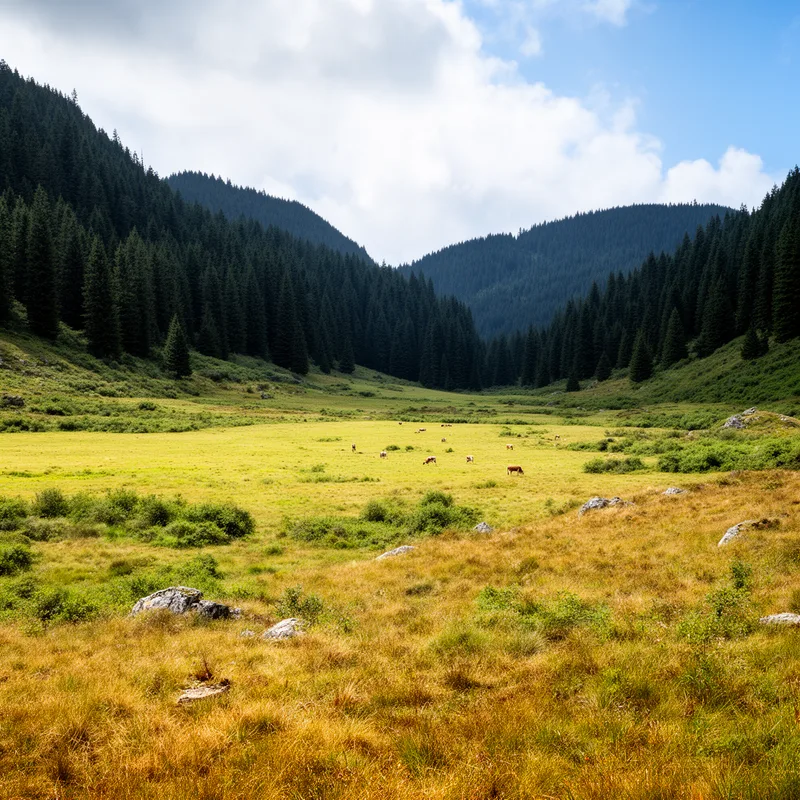
unforested
- adjective
- /ʌnˈfɔrɪstɪd/
- The dry, unforested land stretched endlessly under the harsh sun.
Examples
-
The hikers chose an unforested path to avoid getting lost in the dense woods.
-
The unforested areas, north and south, contain hundreds of villages whose outer buildings would provide concealment and, in some cases, cover for defensive weapons.
Academic text (1991) -
In contrast, if a broader scheme helps increase beef production on unforested lands, for example, no new incentives for deforestation will be created.
Academic text (2009) -
Many animals find it hard to survive in unforested regions where food is scarce.
Synonyms

Land with few or no trees
Land that does not have trees

Not part of a forest or covered in trees
Antonyms


How Forested

Surface Forms
Morphology
Etymology
Unforested breaks into three parts: the prefix un- meaning 'not', the root forest meaning 'a large area of trees', and the ending -ed which here shows a condition like 'covered'. So unforested literally means land 'not covered' by a forest, in other words an area without trees.