
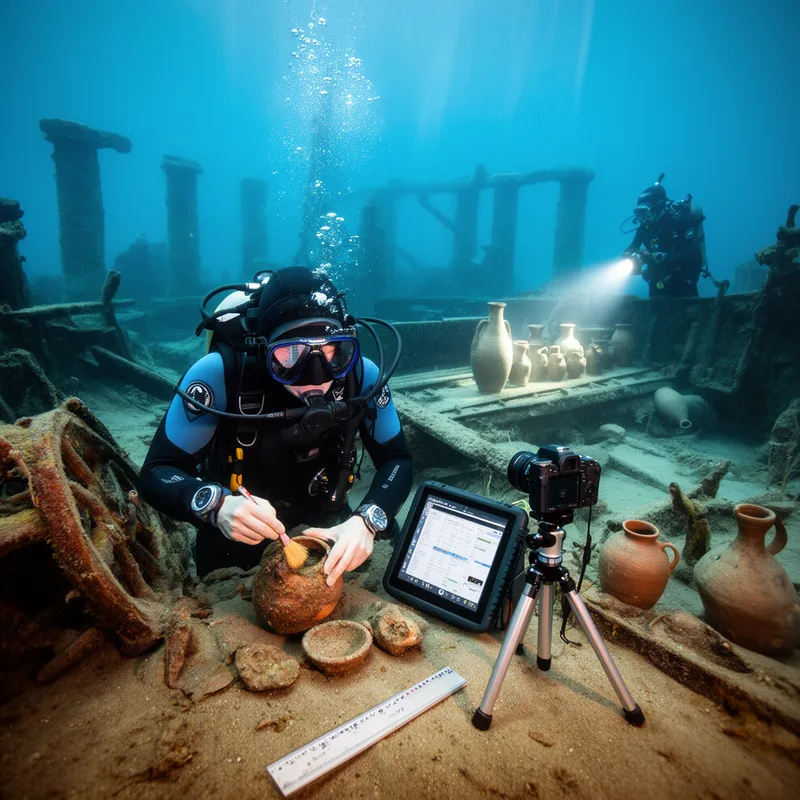
underwater archeology
- noun
- /ˌʌndərˈwɔːtər ˌɑːrkiˈɑːlədʒi/
- Specialized
- Many fascinating discoveries, such as ancient shipwrecks, have been made through underwater archeology.
Examples
-
She is pursuing a degree in underwater archeology to study submerged ruins and lost cities.
-
Advances in technology have greatly expanded the possibilities of underwater archeology in recent decades.
-
Many researchers focus on underwater archeology to uncover lost civilizations.
-
The field of underwater archeology has grown significantly in recent years.
-
Advances in technology have greatly expanded the possibilities of underwater archeology in recent decades.
-
Many fascinating discoveries, such as ancient shipwrecks, have been made through underwater archeology.
-
She is pursuing a degree in underwater archeology to study submerged ruins and lost cities.
Synonyms


 1
6.2
1
6.2
The study of human history under water, for example sunken ships
Surface Forms
Morphology
The phrase combines the adjective 'underwater' (beneath the water surface) with 'archeology' (the study of past human activity through material remains), so the meaning is directly compositional: archeology conducted beneath water. This modifier+noun structure is regular and cross-linguistically common, making the concept immediately understandable to learners who know the constituents.
Etymology
Underwater archeology comes from the simple image of underwater explorers diving below the sea to find old objects so archeology can study them. So, it means 'the study of the past' by finding and examining things left under water.