
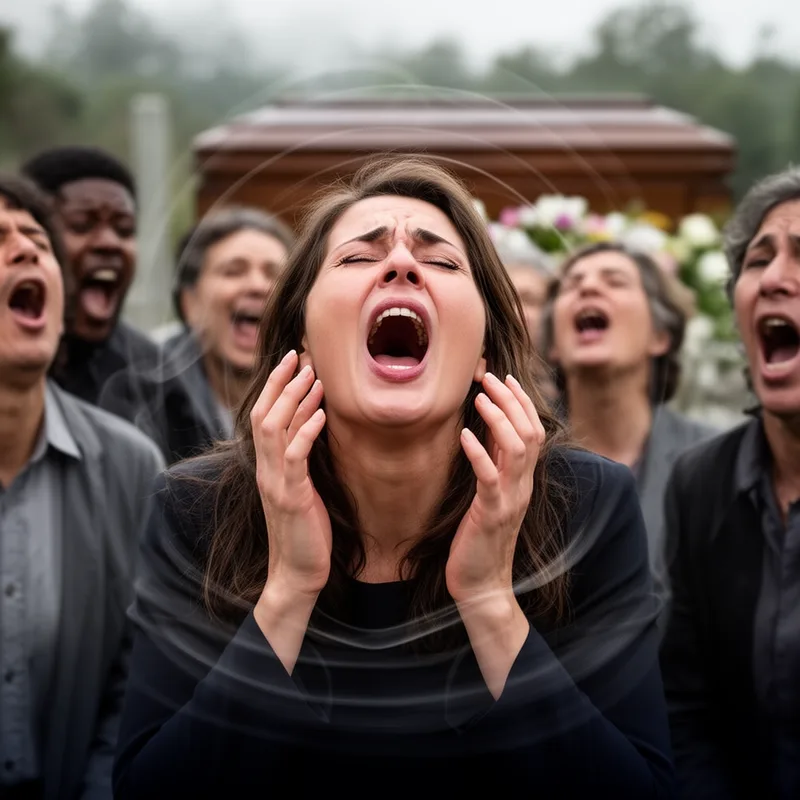
to ululate
 1
9.9
1
9.9

- verb
- /ˈjuːləˌleɪt/
- During the mourning ceremony, people began to ululate to express their grief.
- women ululated
Examples
-
While Kazu kicked and squirmed, Daguna stuck her fist in the air repeatedly, like a prize fighter, and looked around defiantly, ululating in triumph.
Academic text (1992) -
As the sun set, the villagers ululated joyfully to welcome the festival.
-
A woman begins to ululate.
Fiction book (1993) -
Laughing and ululating, all the women had gathered in a circle around them.
Academic text (1992) -
" In the background, Algerian women accompanying the team ululated in rhythm with the chant.
Academic text (2010) -
There was singing, ululating, and applauding as the chief's procession approached and appeared.
Fiction book (1991) -
Some of the women ululated shrilly, causing the skin on Tali's scalp to prickle.
Fiction book (1996) -
Ululating like a stallion hungry with desire, his face red with effort, his Adam's apple trembling, producing all of this quavering sound for what feels like minutes.
Fiction book (1997) -
Under the eyes of the mukhabarat, the plainclothes secret police, soldiers herded all the men into the trucks while the women leaned over balconies and ululated like they would at funerals.
Fiction book (1998) -
The crowd began to ululate in celebration when their team won the match.
Synonyms
 ∞
1.0
∞
1.0
To make a loud high cry because of fear or pain
 342
1.0
342
1.0
To make a loud call to show feeling or get attention
 108
1.8
108
1.8
Shout loudly to show a strong feeling, for example when surprised or hurt
 84
3.2
84
3.2
To make a long loud cry because you are hurt or very sad
 50
3.1
50
3.1
Make a sound like a laugh, cry, or sigh
 48
2.6
48
2.6
To give a long loud cry because of pain, grief, or anger
 39
5.9
39
5.9
Cry or shout loudly and without control


 1
9.9
1
9.9
To make a long loud high cry, often by animals

To make long, loud, harsh cries repeatedly
How Loud

Surface Forms
Morphology
ululate = ulul + ate
Although formed from the Latin/onomatopoeic base ulul- plus the verb-forming suffix -ate, the root is not a recognizable English word, so learners cannot reliably infer the meaning from its parts.
Etymology
The word ululate comes from the Latin verb ululare, which means 'to howl' or 'to wail'. Think of long, wavering cries, like the sound of wolves or mourners, and this is just like the English word howl. So to ululate is to make loud, long cries of strong feeling, such as grief or joy.