
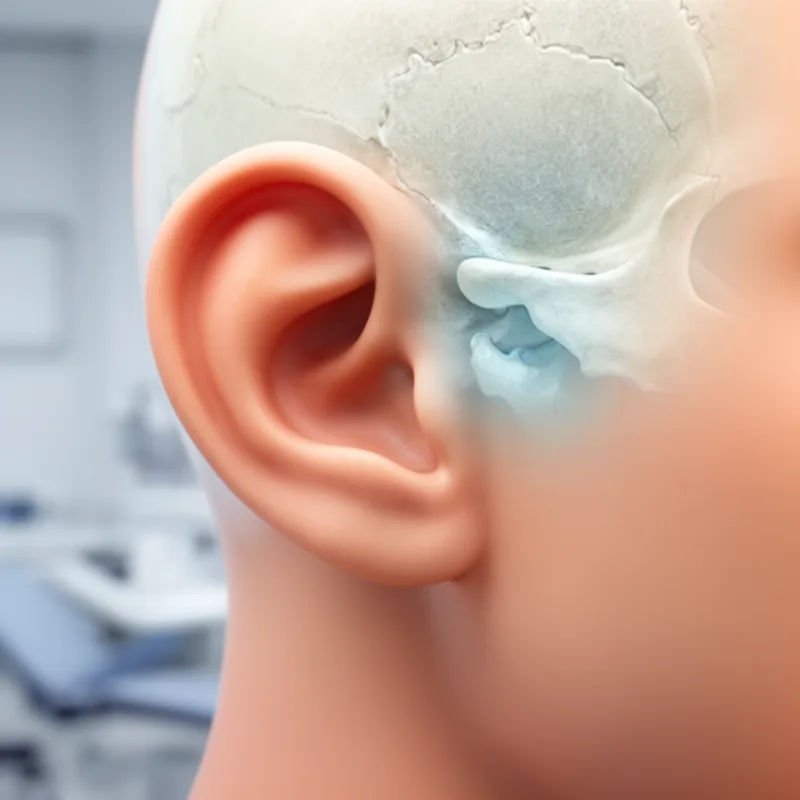
tympanomastoid
- adjective
- Specialized
- The success of tympanomastoid surgery, therefore, has been defined as the attainment of a dry ear postoperatively.
- tympanomastoid obliteration
Examples
-
In surgery, the tympanomastoid region must be carefully accessed to avoid complications.
-
We conducted a retrospective study of 50 ears in 48 patients in whom we performed revision tympanomastoid surgery for chronic otitis media.
Academic text (2002) -
Our goals were to ascertain the likely causes of the previous failures and to identify the sites of unexenterated air cells in the tympanomastoid cavity.
Academic text (2002) -
Another patient developed a hematoma following tympanomastoid obliteration secondary to a rapid escalation of warfarin.
Academic text (2002) -
During revision surgery, 42 ears (84%) were treated with a canal-wall-down procedure, five (10%) with a canal-wall-up procedure, and three (6%) with a canal-wall-down procedure followed by tympanomastoid obliteration with abdominal fat.
Academic text (2002) -
The tympanomastoid area is crucial for doctors to examine when dealing with ear infections.
-
A thorough understanding of tympanomastoid anatomy is essential for otolaryngologists.
Surface Forms
Morphology
Etymology
Tympanomastoid combines the parts tympano- meaning 'drum', as in the eardrum, and mastoid meaning 'breast-shaped', so as an adjective it describes something related to both the eardrum area and the bone behind the ear.

