
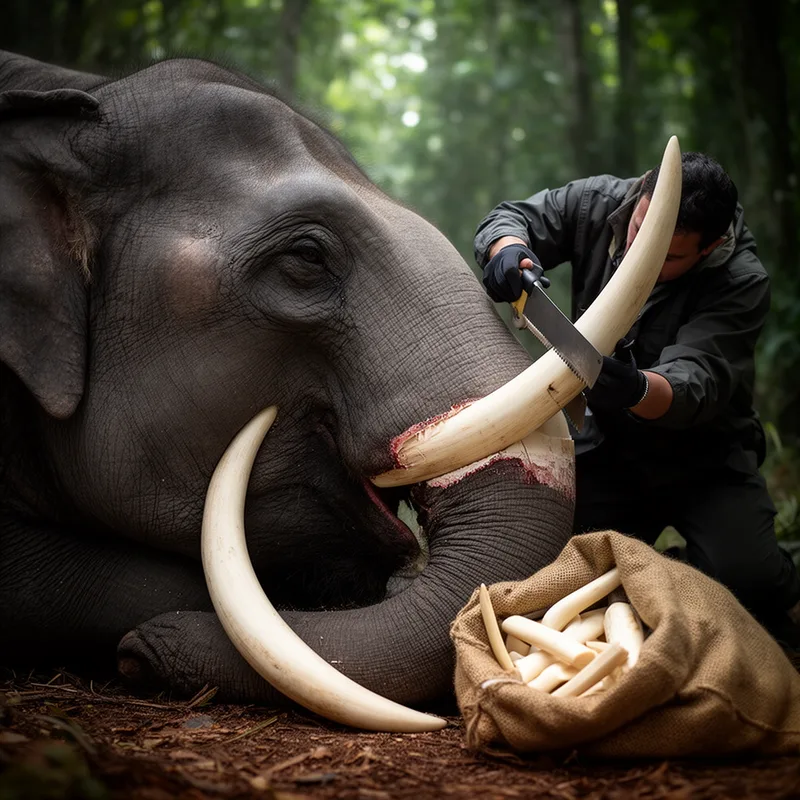
to tusk
- verb
- /tʌsk/
- Don't tusk the animals without permission!
Examples
-
The poachers were caught trying to tusk a herd of elephants for their valuable ivory.
-
They tusked the elephants yesterday.
-
Efforts to tusk walruses for research purposes are carefully regulated.
-
Illicit poachers often tusk elephants for the illegal ivory trade.
-
Veterinarians may tusk wild boars to prevent them from injuring each other.
-
Before the conservation program, estimates showed that thousands of elephants had been tusked for their tusks.
-
Hunters often tusk walruses for their ivory to sell on the black market.
Synonyms

To remove the long front teeth of animals like elephants or rhinos
Antonyms


Compounds
Surface Forms
Etymology
Tusk as a verb comes from the noun tusk (a long tooth), and it originally meant to remove those long teeth from an animal, which is why to tusk an animal is to take its tusks.