

tusk shell
- noun
- /tʌsk ʃɛl/
- Specialized
- The distinctive tubular shape of the tusk shell makes it easy to identify.
Examples
-
The tusk shell burrows into sandy seabeds using its spade-like foot.
-
Scientists collected several tusk shells for their marine biology study.
-
The tusk shell is often found on sandy beaches.
-
Many marine biologists study the tusk shell for its unique structure.
-
The distinctive tubular shape of the tusk shell makes it easy to identify in marine environments.
-
Scientists collected several tusk shells to analyze their structure and habitat preferences.
-
The tusk shell burrows into sandy seabeds, allowing it to feed on tiny particles.
Synonyms
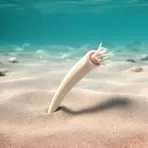
A sea animal with a long tube-shaped shell like a tusk that burrows in sand
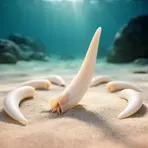
A small sea animal with a long, curved tube-shaped shell

A sea animal that has a long thin shell open at both ends and a foot for digging in sand
Surface Forms
Morphology
The compound is directly compositional: a 'tusk shell' is a shell that resembles a tusk (long, tapered, tubular), so a learner who knows 'tusk' and 'shell' can infer the shape and likely referent. Although it's a specialized zoological name, the noun+noun formation follows normal English patterns and is predictable from the parts.
Etymology
Tusk shell gets its name from the long, thin shell that looks like a tusk, a big animal 'tooth'. So the name simply describes the small sea animal with a tooth-like shell.

