
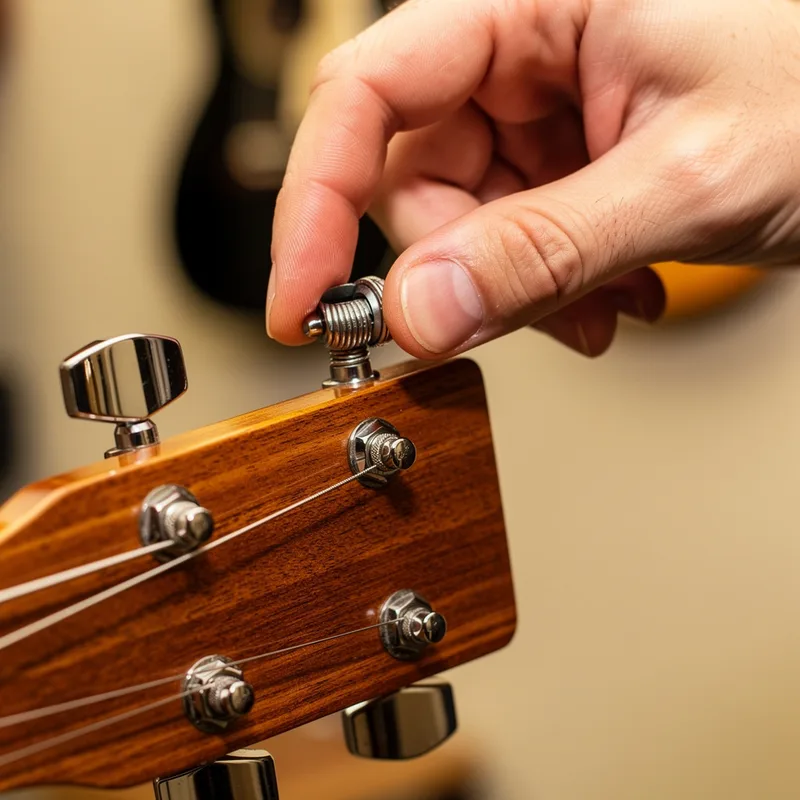
tuning
 10
3.5
10
3.5

- noun
- /ˈtuːnɪŋ/
- Proper tuning of the piano is essential for achieving harmony during performances.
- tuning fork
- tuning pitches
- fine-tuning
Loading YouTube…
Watch on YouTubeIt also has a little bit of the maybe Duane Allman, Little Martha vibe, but a lot of that's just open tuning, you know, so.
- It also has a little bit of the maybe Duane Allman, Little Martha vibe, but a lot of that's just open tuning, you know, so.
Examples
-
Outside class, students can practice interval matching and tuning with the help of an electronic tuner that sounds reference pitches.
Academic text (2002) -
The modern six-string guitar and its standard tuning came into existence only in the early 1800s.
Academic text (2010) -
But violin is different tuning and a much more difficult instrument for me to play.
-
The style differs mainly in the tuning system adopted in both regions.
Academic text (1993) -
By allowing students to explore musical interpretation, not just tunings and fingerings, teachers encourage young musicians to realize creative possibilities.
Academic text (1998) -
Violinists tended to prefer sharper tuning of scales (closer to Pythagorean tuning) compared to pianists who preferred equal-tempered scales.
Academic text (2015) -
The musician spent hours on tuning his violin to ensure it sounded perfect for the concert.
-
After tuning the guitar, he played his favorite song with great precision and clarity.
Antonyms
Compounds
 4
4.5
4
4.5
A small metal tool with two prongs that makes a clear sound to help find the right musical note
Surface Forms
Morphology
Etymology
Tuning also means a particular way of arranging pitch and comes from the same root tonos, the source of English tone, which meant 'stretch' or 'tone'. Different tunings are simply different ways of stretching or setting strings and notes to make a special sound, which is why the word names that exact arrangement of pitch.