

dissonance
 2
7.7
2
7.7

- noun
- /ˈdɪsənəns/
- Specialized
- The sound of the end-of-the-period bell pierces through the band's playing, creating a startling, jarring dissonance with the notes of the piece.
- timbral dissonance
- create dissonance
Loading YouTube…
Watch on YouTubeAnd that intrigued me because it was much, it was a much higher dissonance level than I was used to hearing.
- And that intrigued me because it was much, it was a much higher dissonance level than I was used to hearing.
Examples
-
In modern jazz, dissonance is often used to evoke strong emotions and challenge listeners.
-
And yes, a well-handled example of dissonance can be a powerful tool.
Blog text (8) -
Therefore, a minor second dissonance was created between the correct pitch and the incorrect pitch.
Academic text (2011) -
Dissonance search works best when there is a constant pitch or chord against which to create the dissonance.
Academic text (2006) -
Brubeck and Desmond have gone just as far with dissonance as I care to go.
-
The Poulenc piece has dissonances and delayed resolutions.
Academic text (2003) -
The dissonance between the two singers created an unsettling effect in the performance.
-
The composer skillfully incorporated dissonance to heighten the tension in the music.
Synonyms
 ∞
1.0
∞
1.0
A loud, unpleasant sound that disturbs you
 49
1.4
49
1.4
A loud, unpleasant noise that disturbs people
 14
8.4
14
8.4
A loud, unpleasant mix of different sounds
 2
8.3
2
8.3
A harsh mix of sounds that is unpleasant to hear


 1
8.1
1
8.1
A clashing sound in music when notes do not fit
 1
8.2
1
8.2
A situation where people or things do not agree

A harsh, unpleasant mix of sounds that do not match

A group of musical notes played together that sound tense and not smooth

A lack of agreement in sound, look or relationships
Antonyms
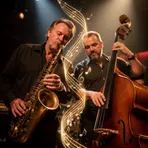
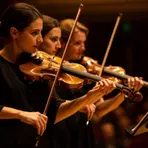

How Dissonant

Surface Forms
Morphology
dissonance = dissonant (semi-transparent) = dis + son + ance
If a learner knows 'dissonant', the noun directly names the condition or effect of being dissonant in sound.
Etymology
Dissonance comes from the Latin parts dis- meaning 'not' or 'apart' and son- meaning 'sound', like in song. So in music dissonance is 'not sounding together', which is why it describes harsh or clashing sounds that lack harmony.