

tung-oil tree
- noun
- /tʌŋ ɔɪl tri/
- Farmers harvest the seeds of the tung-oil tree to produce drying oil for wood finishing.
Examples
-
The tung-oil tree is widely cultivated in China for its valuable seeds.
-
A mature tung-oil tree can yield large quantities of seeds each year.
-
The tung-oil tree is native to China.
-
Many farmers cultivate tung-oil trees for their seeds.
-
Farmers harvest the seeds of the tung-oil tree to produce drying oil for wood finishing.
-
A mature tung-oil tree can yield large quantities of seeds each year.
-
The tung-oil tree is widely cultivated in China for its valuable seeds.
Synonyms



 1
9.9
1
9.9
A Chinese tree whose seeds make oil used to protect and shine wood
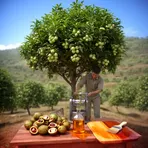
A Chinese tree that produces seeds used to make tung oil for varnish and paint

A tree from China with seeds that make oil used to finish wood and make paint
Surface Forms
Morphology
tung-oil + tree
The noun is a straightforward compound where the first element names a product/material ('tung-oil') and the second is 'tree', so the meaning 'a tree that yields tung oil' is directly derivable from its parts. This follows the common English pattern (e.g. 'olive tree', 'apple tree'); even if 'tung-oil' is rare, a learner who knows the constituent words can predict the MWE meaning.
Etymology
Tung-oil tree is named for the oil made from its seeds. The word tung was a name for that oil and oil shows what people get from the tree, so the name means 'a tree that gives tung oil'.