

tube-nosed fruit bat
- noun
- Australian
- The tube-nosed fruit bat is easily recognized by its unusually shaped nostrils.
Examples
-
Scientists discovered a new species of tube-nosed fruit bat in the rainforest.
-
Many tube-nosed fruit bats play a crucial role in pollinating tropical plants.
-
The tube-nosed fruit bat is known for its unique nostrils.
-
Did you see the tube-nosed fruit bats at the zoo?
-
Many tube-nosed fruit bats are important pollinators for tropical flowers.
-
Researchers have identified a new species of tube-nosed fruit bat in the dense jungles of Southeast Asia.
-
The distinctive nostrils of the tube-nosed fruit bat help it adapt to its feeding habits.
Synonyms

A fruit bat with nostrils that stick out like small tubes
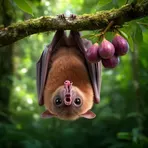
A fruit bat with nostrils shaped like tubes

A fruit-eating bat with tube-shaped nostrils that point outward

A group of fruit bats from New Guinea and nearby islands with tube-shaped nostrils
Surface Forms
Morphology
The phrase is fully compositional: 'fruit bat' denotes a bat that eats fruit and 'tube-nosed' describes having tube-like nostrils, so a learner who knows 'tube'/'nose', 'fruit' and 'bat' can infer it refers to a bat with tube-shaped nostrils. This follows ordinary English compounding and descriptive morphology (and similar patterns occur in other languages), making the meaning immediately derivable from the parts.
Etymology
Tube-nosed fruit bat gets its name from the bat's strange 'nose': the parts tube and nosed describe nostrils that look like small tubes on a fruit bat. So the name is a simple, literal description that helps you recognise this type of bat.

