

tube-nosed bat
- noun
- Australian
- The tube-nosed bat is easily recognized by its unusual nostrils, which protrude like small tubes from its snout.
Examples
-
Unlike many bats, the tube-nosed bat feeds primarily on fruit and is important for pollination.
-
Researchers in Papua New Guinea discovered a new species of tube-nosed bat during their expedition.
-
The tube-nosed bat is known for its unique nostrils.
-
A tube-nosed bat can be found in tropical forests.
-
Researchers in Papua New Guinea discovered a new species of tube-nosed bat during their expedition.
-
The tube-nosed bat is easily recognized by its unusual nostrils, which protrude like small tubes from its snout.
-
Unlike many bats, the tube-nosed bat feeds primarily on fruit and is important for pollination.
Synonyms

A bat that eats fruit and has tube-shaped nostrils that point away from each other

A fruit-eating bat with tube-shaped nostrils that point outward
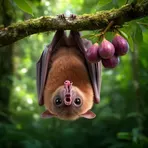
A fruit bat with nostrils shaped like tubes
Surface Forms
Morphology
tube-nosed + bat
The phrase is compositionally transparent: 'tube-nosed' is analyzable as tube + nosed (having tube-like nostrils) and 'bat' names the mammal, so a learner who knows those words can infer it denotes a bat with elongated, tube-like nostrils. This follows regular English compounding and adjective formation patterns and is cross-linguistically describable, making the meaning predictable for B1 learners.
Etymology
Tube-nosed bat comes from the bat's unusual nose: the parts tube and nosed show that its 'nostrils' stick out like little tubes, so the name simply describes this bat with tube-like nostrils.

