
trypan


 1
9.9
- noun
- /ˈtraɪpən/
- Specialized
- Two microliters of cell-culture medium (with 0.1% trypan blue) containing cells at a concentration of 2500-5000 cells/l were injected.
- trypan blue
Examples
-
Cell counting was done by hemocytometer with Trypan blue staining to exclude dead cells.
Academic text (2016) -
(c) Typical mycorrhizae of Acaulospora morrowiae stained in 0.05% trypan blue.
Academic text (2001) -
Successful injection was confirmed by visual detection of trypan blue in the ductal tree branches.
Academic text (2017) -
Amongst the fruit parts, Gac seed at the highest concentration of 1,000 microg/mL had the highest anti-proliferative activity tested by MTT and Trypan blue dye.
Academic text (2018) -
(d) Typical mycorrhizae of Gigaspora rosea stained in 0.05% trypan blue; inset shows auxiliary cells.
Academic text (2001) -
Growth curve and estimation of cell viability by Trypan Blue dye: The cells with a concentration of 1.5 x 10^4 cells per milliliter were seeded into 24-well plates.
Academic text (2013) -
The laboratory technician used trypan blue to assess cell viability after treatment with different substances.
-
Researchers often rely on trypan blue staining to differentiate between live and dead cells in their experiments.
-
In the study, the effectiveness of the drug was evaluated using trypan blue exclusion method for accurate cell counting.
Synonyms
 1
9.9
A tiny single-celled parasite that makes people and animals sick, for example sleeping sickness
 1
9.9
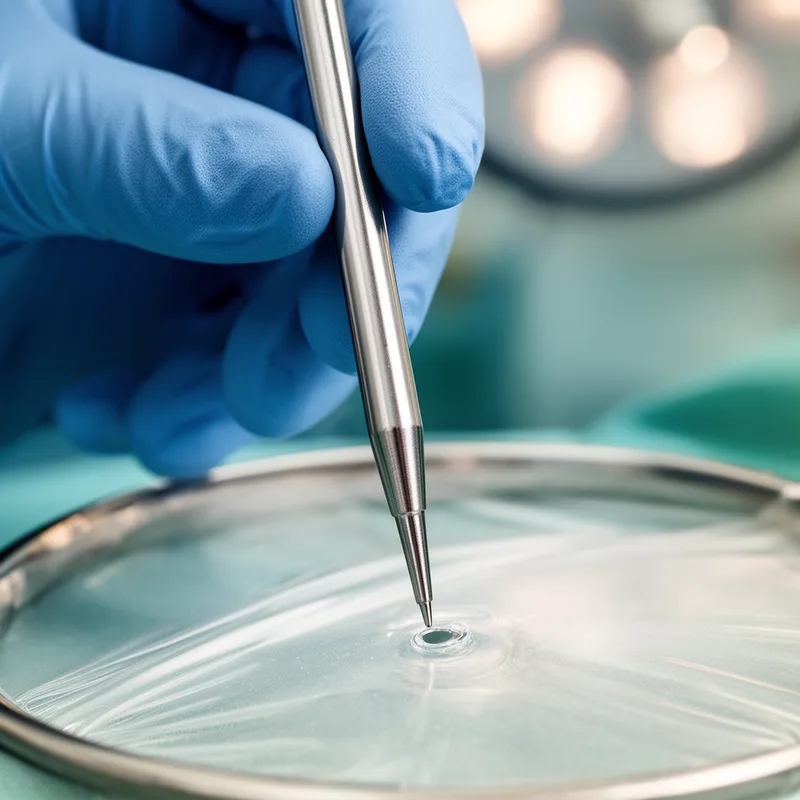
A round tool used in surgery with a sharp blade for cutting holes in bone
 1
9.9
A tiny parasite that lives in the blood of people and animals and causes sleeping sickness or Chagas disease
Surface Forms
Etymology
Trypan comes from the old Greek word trypanon, which means 'borer' or 'drill', like a small tool that makes a hole. So, a trypan is a thin surgical instrument used to make a small opening in tissue, and the parasite Trypanosoma was named for its 'borer-like' shape.