
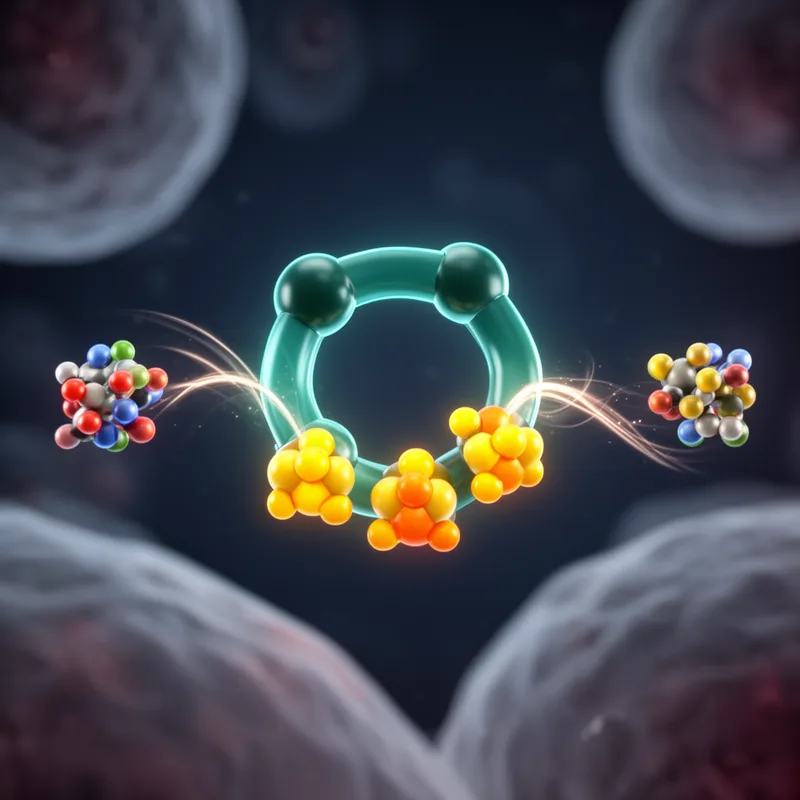
triphosphopyridine
- noun
- /trɪˌfɔsfoʊpɪˈrɪdin/
- Specialized
- The coenzyme triphosphopyridine plays a vital role in cellular metabolism.
Examples
-
Researchers studied the structure of triphosphopyridine to understand its function in redox reactions.
-
Scientists isolated triphosphopyridine from the cell extract during their experiment.
-
The triphosphopyridine molecule is vital for cellular processes.
-
What is triphosphopyridine used for?
-
The coenzyme triphosphopyridine is essential for the synthesis of nucleotides in cells.
-
In metabolic pathways, triphosphopyridine helps facilitate the transfer of electrons.
-
Studies show that triphosphopyridine contributes significantly to energy production in photosynthesis.
Synonyms

 1
7.0
1
7.0

A small chemical made of three phosphate parts that stores energy for cells
A chemical that helps enzymes transfer energy during cell processes
Surface Forms
Morphology
triphosphopyridine = phosphopyridine (opaque) = tri + phospho + pyridine
The term uses specialized chemical combining forms ('phospho-', 'pyridine') that are not inferable by an average B1 learner from the component words alone.
Etymology
Triphosphopyridine comes from three parts: tri- 'three', phospho- 'phosphate' (like the familiar word phosphate), and pyridine 'a ring-shaped molecule'. So the name means a pyridine ring with three phosphate groups attached, which is why it describes that kind of compound.