
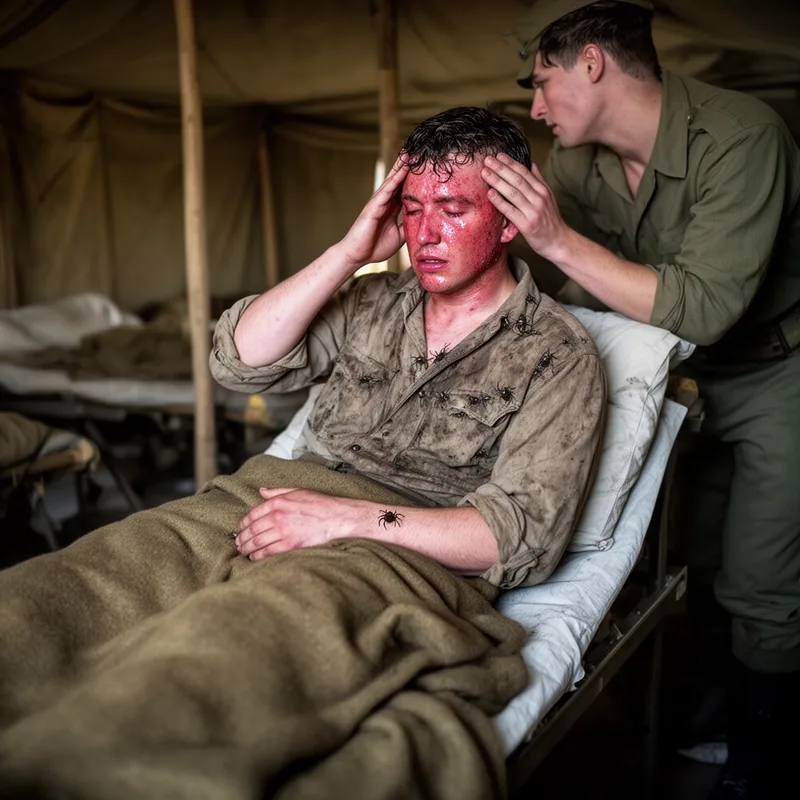
trench fever
- noun
- /trɛnʧ ˈfiːvər/
- Specialized
- Many soldiers in World War I suffered from trench fever due to unhygienic living conditions.
Examples
-
The outbreak of trench fever was traced to lice infestation in the camps.
-
He was hospitalized after experiencing symptoms associated with trench fever.
-
Soldiers suffering from trench fever often experienced severe fatigue.
-
The trench fever outbreak in 1916 affected thousands of troops.
-
During World War I, many soldiers suffered from trench fever due to poor living conditions and lice infestations.
-
After returning from the front lines, he was diagnosed with trench fever, which left him with severe muscle pain and fatigue.
-
Health officials warned that trench fever could spread quickly in crowded shelters, particularly among those with limited access to hygiene.
Antonyms

 ∞
1.0
∞
1.0

The condition of a person's body and mind, especially being free from illness or injury
Surface Forms
Morphology
The compound is compositionally built from 'trench' (a place/ditch) + 'fever' (an illness with high temperature), so a B1 learner who knows both words will readily infer it denotes a fever/illness associated with trenches (e.g., among soldiers). This follows standard noun–noun modification cross-linguistically, making the core meaning transparent even though specific medical details (lice transmission) are not predictable from the constituents.
Etymology
Trench fever comes from trench, the deep muddy ditches where 'soldiers' lived in World War I, and fever, the high temperature the illness caused. In those crowded, dirty trenches, 'lice' spread the sickness, so trench fever now means the disease spread by lice that caused pain and fever among soldiers.