
transduction
- noun
- /trænzˈdʌkʃən/
- Specialized
- For lentiviral transduction, packaged viral particles were directly added to the culture media.
- viral transduction
- transduction of cells
Examples
-
First, transduction of MCF-7:5C cells with the construct was accomplished using 100 µL virus-containing medium in 2 mL normal medium.
Academic text (2017) -
There, he continued working on lambda transduction in E. coli, but found that the virus would not efficiently propagate.
Blog text (14) -
And this is done through a process called transduction, which is a form of recombination.
-
In vitro, they can be delivered by transient plasmid transfections or viral transduction for long-term silencing.
Academic text (2016) -
Plasmids can transmit the characteristic of drug resistance (n30) between bacteria by conjugation, transformation, or transduction.
Academic text (2000) -
In gene therapy, transduction allows scientists to introduce new genetic material into cells using modified viruses.
-
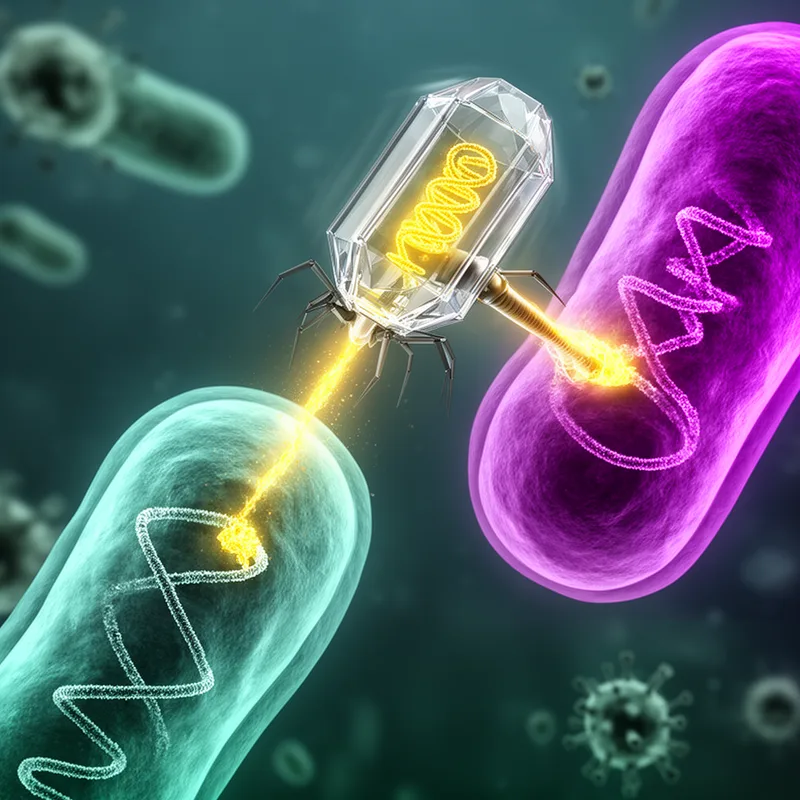
Researchers observed that transduction can efficiently transfer beneficial genes from one bacterium to another.
-
The transduction method used in the lab enabled the genetic modification of bacteria to enhance their abilities.
Surface Forms
Morphology
transduction = transduce (transparent) = trans + duce + ion
Derived from the verb 'transduce' with the nominalizing suffix '-ion'; structurally transparent though the meaning is specialized to genetics.
Etymology
Transduction comes from trans- ('across') and duct ('to lead'), the same root you see in conduct. In biology it is like a tiny mail ferry that 'leads' DNA across from one cell to another, so transduction means the transfer of genetic material between cells.

