
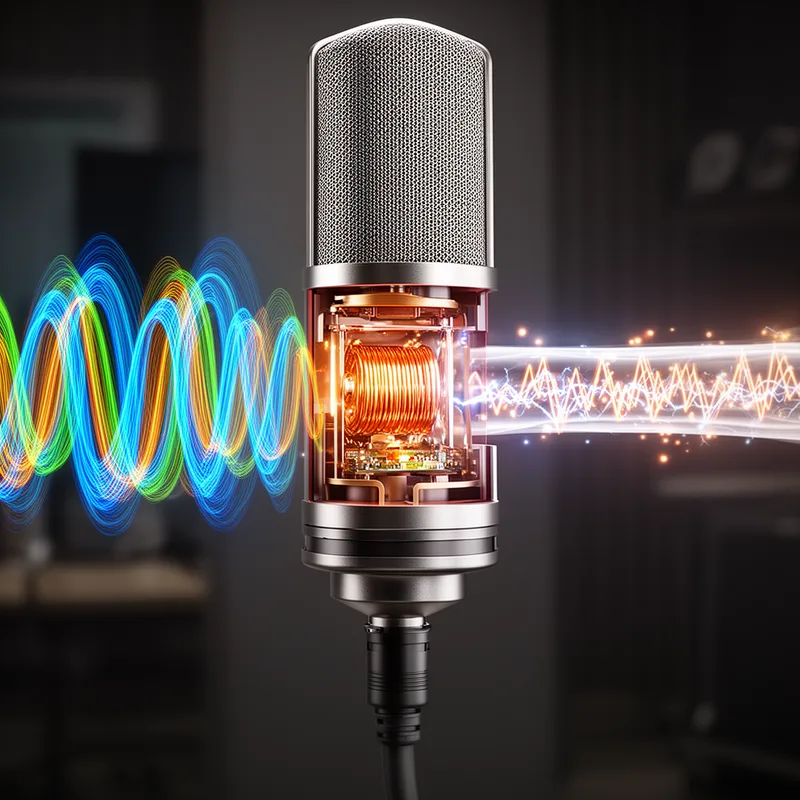
to transduce


 1
9.8
1
9.8
- verb
- /trænˈdjus/
- Specialized
- The sensors in the device transduce energy from light into electrical signals.
- cells were transduced
Loading YouTube…
Watch on YouTubeIt's the place where you transduce incoming sound into neural impulses.
- It's the place where you transduce incoming sound into neural impulses.
- And sure signals, you know, are, you know, hit those surfaces and those surfaces transduce those signals and send them up to the brain.
- And I think there are latent systems in the brain that once activated, allows the brain to transduce that energy, that frequency into profound information.
- That radio receiver is switched on and it's transducing frequency into very profound imagery in their brain, just like ATV antenna.
Examples
-
In the human ear, hair cells transduce mechanical vibrations into nerve impulses.
-
These are the receptors that transduce temperature sensation.
-
Other imaging systems transduce visual information that is imperceptible to the human eye into visible forms.
Academic text (2004) -
It's the place where you transduce incoming sound into neural impulses.
-
Now the incoming light from the outside world has been transduced to neural information, commensurate with the substrate of other thoughts.
Blog text (2) -
The acoustical signals gathered by the microphone are electrically transduced, traveling via cable to the speech processor.
Academic text (2009) -
Neurotransmitter substances are released from the outer hair cells onto the afferent nerve fibers leading to the brain when the outer hair cells' electrical responses are transduced into chemical signals.
Academic text (1998) -
These devices transduce sound waves into digital signals for better processing.
Synonyms
 65
3.7
65
3.7
Change something so it works in a different system
 11
3.7
11
3.7
Change one form of energy into another
 8
7.5
8
7.5
To change something into a different form or material

Change something into a different form or nature
Surface Forms
Morphology
transduce = trans + duce
Formed from the productive prefix 'trans-' + the combining root 'duce' (lead); the technical sense 'convert/lead across' is derivable for learners familiar with scientific vocabulary, but 'duce' is not a standalone English word and the term is specialized.
Etymology
Transduce comes from the Latin parts trans- 'across' and ducere 'to lead'. So to transduce is to 'lead' something across into a new form, as when a microphone turns sound into electrical signals.