
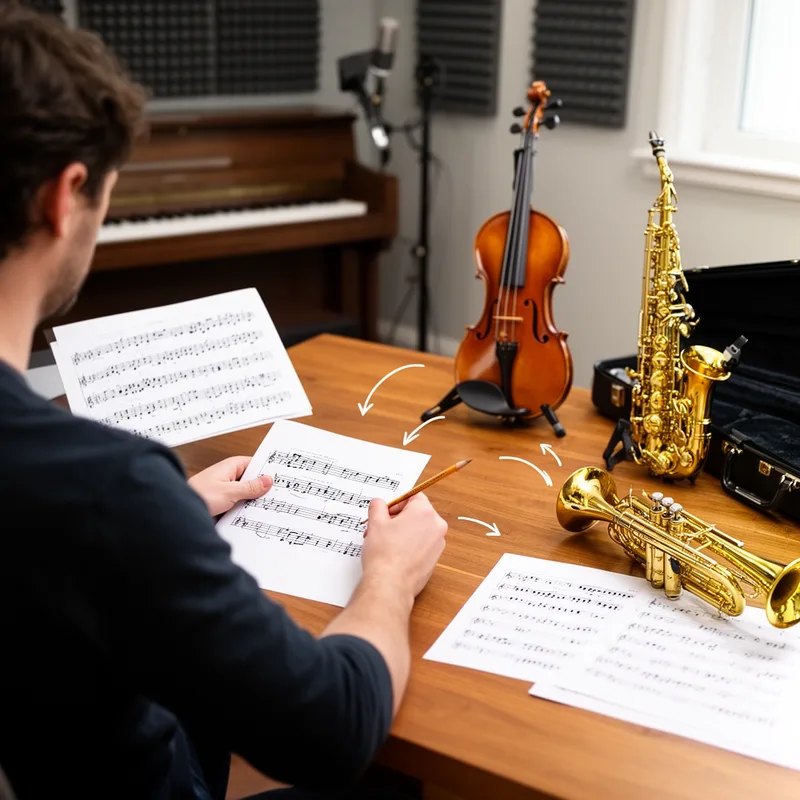
transcriptionally
- adverb
- /trænˈskrɪpʃənəli/
- Specialized
- She approached the old folk song transcriptionally, carefully notating each part for the new ensemble.
Examples
-
He arranged the symphony transcriptionally for piano solo.
-
The piece was reimagined transcriptionally to suit the unique sound of the jazz band.
-
The composer worked transcriptionally to adapt the symphony for a string quartet.
-
The piece was adapted transcriptionally for a string quartet.
-
The composer worked transcriptionally to adapt the symphony for a string quartet.
-
She approached the old folk song transcriptionally, carefully notating each part for the new ensemble.
-
The piece was reimagined transcriptionally to suit the unique sound of the jazz band.
Surface Forms
Morphology
transcriptionally = transcriptional (semi-transparent) = transcript + ion + al + ly
The adverbial form is clearly derived from the adjective 'transcriptional'.
Etymology
Transcriptionally comes from the parts trans- 'across' and scribere 'to write', the same idea you see in transcript and script. So when a composer works transcriptionally, they 'write across' a piece for a new instrument or group, keeping the music but changing its form.

