

tragic massacre
- noun
- /ˈtrædʒɪk ˈmæsəˌkɚ/
- NSFW
- The memorial honors those lost in the tragic massacre a century ago.
Examples
-
The historian gave a talk on the tragic massacre that occurred in the village.
-
News reports detailed the aftermath of the tragic massacre with interviews from survivors.
-
The tragic massacre shocked the entire nation.
-
Many people mourned after the tragic massacre occurred.
-
The community held a memorial service to honor the victims of the tragic massacre that left many families devastated.
-
News reports highlighted the tragic massacre that occurred in the small town, shocking the nation and prompting calls for change.
-
Witnesses recounted the horrifying details of the tragic massacre that unfolded in the city, leaving a lasting impact on all who were affected.
Synonyms

 915
3.0
915
3.0

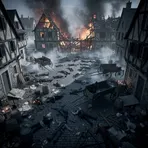
A very sad event that causes much suffering and loss
 198
7.0
198
7.0
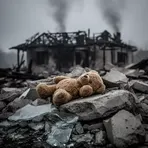
The violent killing of many people in a cruel way
 151
8.1
151
8.1
A very cruel or violent act that shocks people, often against innocent people
 107
4.6
107
4.6
Killing or hurting many people in war and other violence
 80
5.7
80
5.7
Violent killing of a large number of people
 65
8.2
65
8.2
A mass killing of people, often during war or attacks
 45
7.0
45
7.0
A violent event in which many people are killed or a situation with very large losses
 38
6.7
38
6.7
Killing many people on purpose at the same time or in a short time
 6
9.3
6
9.3
A large-scale killing of people during war or political violence
 1
8.1
1
8.1
The very violent killing of many people
Antonyms

How Violent

Surface Forms
Morphology
The meaning is directly compositional: 'tragic' (causing great sadness) modifies 'massacre' (the killing of many people), so a B1 learner who knows both words can infer it denotes a particularly sorrowful large-scale killing. This adjective+noun combination follows normal semantic composition patterns and is cross-linguistically transparent, so the phrase is predictable from its parts.
Etymology
Tragic massacre comes from joining tragic (meaning 'very sad') and massacre (meaning 'the killing of many people'). Picture a place where many people are suddenly killed and everyone is left in deep sadness and shock; that strong image is why the phrase means 'an extremely violent event where many people are killed and that causes great sorrow and shock'.